
Truck Unloading Lift
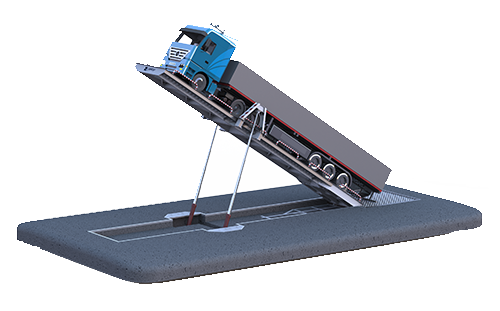
Principle of Operation
The vehicle is positioned according to the rear wheel rests and fixed with fixing rings and chain etc. elements. After the environmental safety is taken, the lift is lifted from the control panel and the product is discharged into the bunker.
Product Features
- Two lifting cylinders are used to ensure balanced lifting.
- Wheel rests can be adjusted hydraulically if desired.
- Lift chassis is capable of lifting the heaviest vehicles in the truck class.
Safety at Work
- Low voltage directive 2014/35/EU
- Machinery Directive 2006/42/EC
- Electromagnetic compatibility directive 2014/30/EU
- Related Harmonised Standards : EN12100 – 1, EN12100 – 2, EN 14121-1, EN 287-1, EN 60204-1, EN 61000, EN 55011
Options
- Hydraulic adjustable gauge.
- Pneumatic controlled sliding gauge.
- Separate gauge system for lorry and truck.
Spare Parts
- Hydraulic Cylinder and Seals.
Reasons for Preference
- Lifting angle and height can be adjusted with hydraulic stepped piston.
- Double main piston.
- Reinforced steel platform.
- Lifting capacity up to a maximum of 100 tonnes.
Farm Type Silo
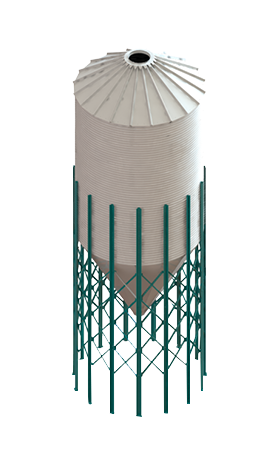
Principle of Operation
Galvanised silos are designed for storing free flowing materials such as wheat, barley, soya beans, sunflower, corn etc. There are 3 different options as Commercial Type Silos, Conical Bottom Silos, Poultry House Type Silos.
Product Features
- With specially designed corrugated side wall sheets and vertical connection bollards, an extra strength is added to the existing construction.
- It is made of special galvanised sheet metal that can respond to various weather conditions.
- Quality bolts and fasteners are used.
- There are durable ladders with safety cages for access to the silo roof.
- There is a ventilation system.
- There are entrance hatches on the side of the body and on the roof.
Safety at Work
- Low voltage directive 2014/35/EU
- Machinery Directive 2006/42/EC
- Electromagnetic compatibility directive 2014/30/EU
- Related Harmonised Standards : EN12100 – 1, EN12100 – 2, EN 14121-1, EN 287-1, EN 60204-1, EN 61000, EN 55011
Options
- For the safety of the grain contained in it (against the threat of overheating, condensation, insect infestation), a floor-ceiling ventilation and temperature sensor system can be installed, which works in conjunction with each other and can be adapted to the central control system if necessary.
- Bottom scraper assembly.
- Aspiration system.
- Seviye tespit sensörü.
Spare Parts
- Bolt
- Nut
Reasons for Preference
- Easy installation with bolted design.
- Maximum resistance to stress and corrosion.
- Special design to ensure air and water tightness.
- Easy filling and emptying.
- Special design silo roof against snow and wind load.
FLAT BOTTOM GALVANIZED SILO
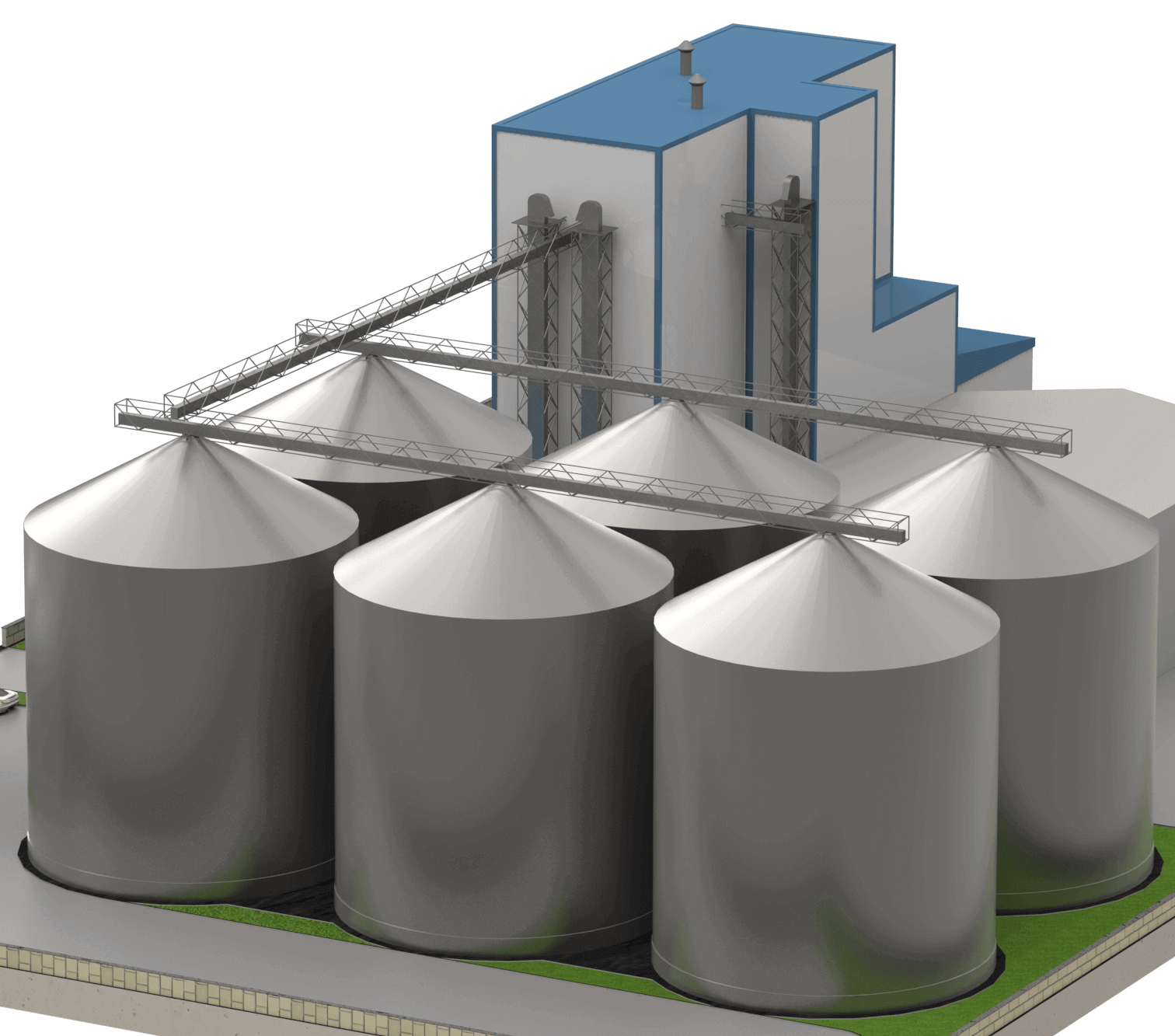
Principle of Operation
Flat bottom galvanized silos with different diameters used for long-term and high tonnage grain (wheat, corn, barley, sunflower, rice, soybeans) storage can store products from 100 tons to 15000 tons.
Product Features
- Modular design.
- Robust and lightweight construction with appropriate static calculations.
- Bolted structure, easy maintenance and disassembly.
- Temperature and humidity measuring systems.
- They are designed in the desired size and capacity.
- Bolts with 10.9 quality, JS1000 or Geomet500A coating are used in sheet metal joints.
Safety at Work
- Low voltage directive 2014/35/EU
- Electromagnetic compatibility directive 2014/30/EU
- Machinery Directive 2006/42/EC
- Related Harmonized Standards : EN12100 – 1, EN12100 – 2, EN 14121-1, EN 287-1, EN 60204-1, EN 61000, EN 55011
Options
- Side discharge system.
Spare Parts
- Plated Bolt.
- Nut.
Reasons for Preference
- Easy to assemble and disassemble.
- Low installation cost.
- Low cost storage possibility.
ROUND SILO
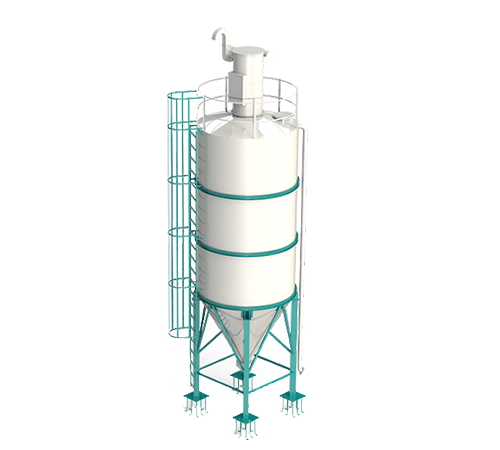
Principle of Operation
It is a storage product used for storing powdery and granular raw materials such as powder feed, pellet feed, cereals.
Product Features
- It is made of galvanized sheet material and has bolted construction.
- Dust tightness feature is provided.
Options
- It is manufactured with standard diameter and length dimensions determined to provide the requested storage volume.
Spare Parts
- Bolt.
- Nut.
- Rondela.
Reasons for Preference
Easy installation with bolted design.
Maximum resistance to stress and corrosion.
Special design to ensure air and water tightness.
Easy filling and emptying.
SQUARE SILO
Principle of Operation
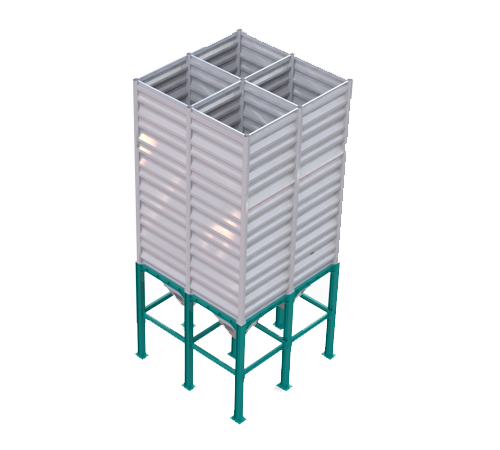
They are used for storing many granular and powdered products such as grain or feed.
Product Features
They are manufactured in interlocking trapezoidal modular twisted form.
They can be mounted on steel construction or concrete base.
It is bolt connected structure, maintenance and disassembly is facilitated.
It is based on the principle of first in first out.
They are designed in the requested size and capacity.
They are manufactured from galvanized steel or stainless steel.
Safety at Work
Low voltage directive 2014/35/EU
Machinery directive 2006/42/EC
Electromagnetic compatibility directive 2014/30/EU
Related Harmonized Standards : EN12100 – 1, EN12100 – 2, EN 14121-1, EN 287-1, EN 60204-1, EN 61000, EN 55011
Options
Single or multiple outputs.
Cellular partitions can be made.
Spare Parts
Bolt.
Nut.
Reasons for Preference
Easy to assemble and disassemble.
Easy to use.
Provides more storage space in narrow spaces.
MACRO DOSAGE
Principle of Operation
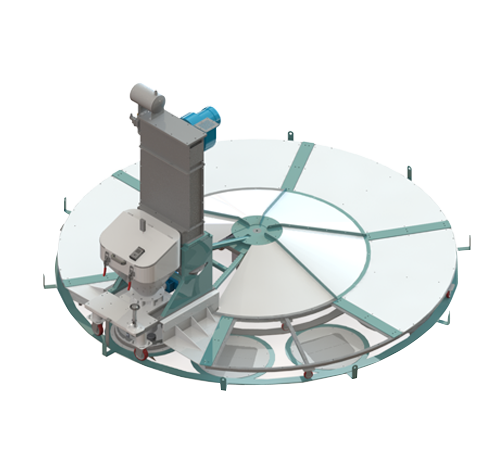
There is a barcode on the sack that identifies the product. Which barcoded product will be stored in which silo is determined in the system, so different products are not mixed in the same silo. The automation system, which receives commands according to the barcode scanned by the mobile scanner, ensures the rotation of the reducer and the positioning of the mechanism assembly. It allows the premix materials filled into the hopper to be transported to the desired silo. It consists of a gearbox with hollow shaft, helical gear, helical gear, 1.2 rpm speed and a shaft-chassis assembly connected to it, which is placed on the upper platform of the 10 premix silos, in the center, this system rotates 360 degrees around the center and the proxy sensors are provided with the most suitable position and the unloading process is provided to the relevant premix silo. The moving part moves on 50×10 sheet metal guide rails with smooth surface. The load is transported safely and stably on 4 fixed caster legs at low speed.
Product Features
There is a pneumatic moving discharge throat.
The dust that occurs in the silo during unloading is prevented from coming out thanks to the sealed gasket in the discharge area.
Air suction ducts are used to ensure that there is no vacuuming in the silo and air circulation, so that the dust formed is absorbed into the filter.
For the recovery of the dust adhering on the filter cloths, the blast valves perform shaking operation, at the same time the directional flap is tilted backwards and the dust is discharged into the bunker.
It has bolted connection structure, maintenance and disassembly is facilitated.
Safety at Work
Electromagnetic compatibility directive 2014/30/EU
Related Harmonized Standards : EN12100 – 1, EN12100 – 2, EN 14121-1, EN 287-1, EN 60204-1, EN 61000, EN 55011
Low voltage directive 2014/35/EU
Machinery directive 2006/42/EC
Options
- For dosing units with 10 or more round or carepremix silos.
Spare Parts
Bearings and Housings
Pneumatic Piston
Blower System
Fan
Reasons for Preference
Accurate Weighing
Fast Dosing
Dust-free Discharge
Reliable Locking Mechanism
DOSAGE CANTE
Principle of Operation
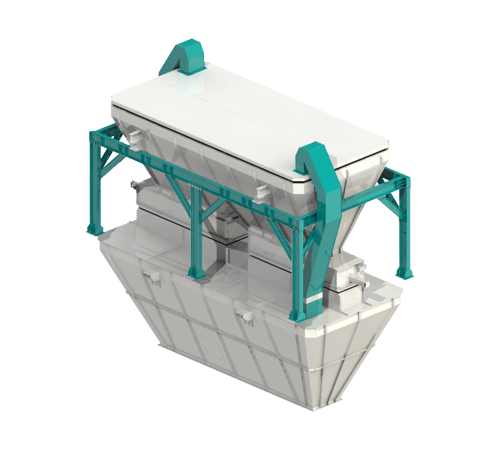
Dosing Scale used in dosing, mixing and pellet unit in feed plants is used for weighing semi-finished products (material to be mixed) in feed factories and converting them into finished products. It is used for dosing different substances to be contained in the feed from different silos in accordance with the prescription.
Product Features
Body is made of St 37 material.
After weighing, there is a pneumatic wagon sliding cover that provides fast discharge to the bunker.
Ventilation pipe providing pressure balance during filling and unloading.
Maintenance covers on the body for product control.
2 – 32 types of material dosing possibility.
The system works computer controlled with load cell and indicator data.
Safety at Work
Low voltage directive 2014/35/EU
Machinery directive 2006/42/EC
Electromagnetic compatibility directive 2014/30/EU
Related Harmonized Standards : EN12100 – 1, EN12100 – 2, EN 14121-1, EN 287-1, EN 60204-1, EN 61000, EN 55011
Options
It can be manufactured from galvanized or stainless steel sheet upon request.
They can be manufactured in different sheet thicknesses.
They can be produced in different volumes.
Precise weighing
Spare Parts
- Load Cell
- Maintenance Cover
Reasons for Preference
Precise and fast weighing.
Possibility of maximum capacity dosing.
OIL DOSAGE SCALE
Principle of Operation
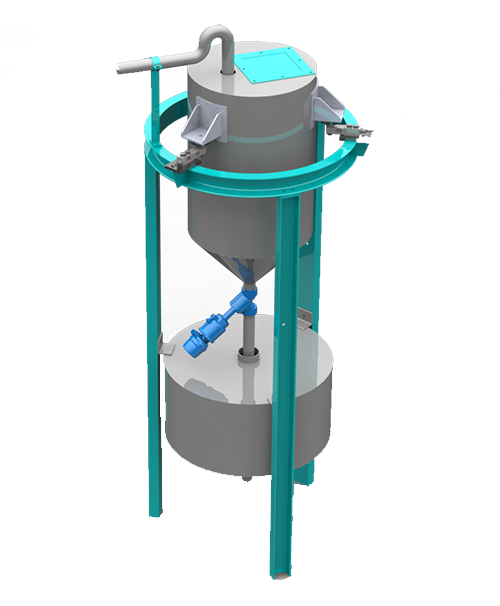
Oil and similar liquid products need to be dosed with high precision in order to be added into the mixer in certain proportions or into the equipment in other processes. Dosing scales designed to perform this process in a healthy way generally consist of two chambers, there are equipment that measure volumetric liquid flow between the chambers, and when the desired amount of liquid is passed, the flow is interrupted and the liquid is added to the process in the right amount.
Product Features
- There is a maintenance cover on the body.
- There is a contactless connection between the upper chamber and the lower chamber.
- 3 rubber wedges on the loadcel and the upper chamber is not affected by vibrations during filling.
- Cylindrical body heights can be changed to optimize the volume.
- The diameters of the lower outlet, upper inlet and middle transfer pipe groups may vary according to the desired flow rate and installation.
Options
It can be manufactured from black sheet, AISI-304 or AISI-316 stainless steel sheet material upon request.
- Sheet thickness can be changed according to demand.
Spare Parts
- Bolt
- Nut
- Actuated
- ValveLoadcell
Reasons for Preference
Since it is pre-weighing, waiting time is low.
MİKRO DOZAJ
Principle of Operation
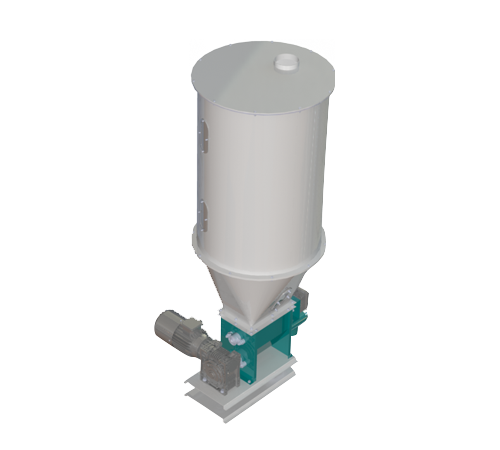
It performs the precise weighing of the products such as micronutrients, vitamins, etc. to be added to the feed and carries out the delivery of the weighed product to the dosing scale with the auger in the system.
Product Features
- Compact Structure.
- Bolted structure, easy maintenance and disassembly.
- Instant monitoring of product filling with sight glasses on the body.
- It has 3 load cells.
- Precise weighing capability with the use of Teflon auger material and smaller pitch range.
Safety at Work
- Low voltage directive 2014/35/EU
- Machinery directive 2006/42/EC
- Electromagnetic compatibility directive 2014/30/EU
- Related Harmonized Standards : EN12100 – 1, EN12100 – 2, EN 14121-1, EN 287-1, EN 60204-1, EN 61000, EN 55011
Options
Made of stainless sheet material.
Spare Parts
Bearing and Housing
Load Cell
Reasons for Preference
Fast and precise weighing.
Different product formula components.
Homogeneous product shipment.
Obtaining quality feed.
Ration tracking.
PAN SIEVE
Principle of Operation
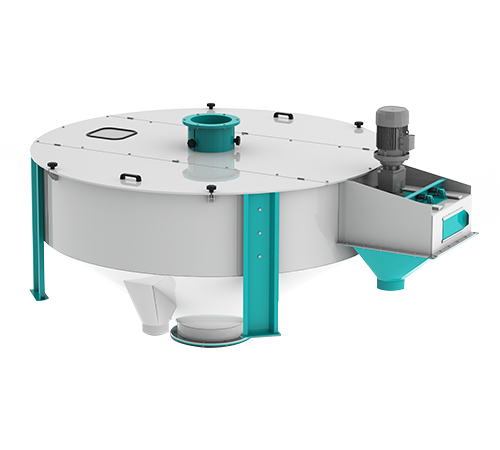
There is a specially designed sieve inside the pan sieves. The sieves are designed to be center-driven and side-driven according to their capacities. The semi-finished products coming on the sieve are thrown towards the side parts with the center escape force gained as a result of the rotational movement of the sieve. With the shaking and vibration caused by the semi-finished products hitting the sieve sheet, the dust particles pass through the sieve sheet and are reintroduced to the system from the dust collection bunker.
Product Features
- Sieve sheets can be made according to desired grain sizes.
- There is a wide cover system at the top of the body to facilitate cleaning inside the sieve.
- Sieve sheets can be manufactured from stainless steel upon request.
Safety at Work
Electromagnetic compatibility directive 2014/30/EU
Related Harmonized Standards : EN12100 – 1, EN12100 – 2, EN 14121-1, EN 287-1, EN 60204-1, EN 61000, EN 55011
Low voltage directive 2014/35/EU
Machinery directive 2006/42/EC
Options
- They can be manufactured in different sizes.
- Sieve sheet can be made of stainless steel.
- Multiple output system can be applied.
- It can work with central or side drive.
Spare Parts
- Bearings and Housings
- Sieve Sheet
Reasons for Preference
- Sieve plate with adjustable holes.
- Easy access and easy cleaning thanks to the maintenance covers on the body.
- Easy replacement of sieves.
- Ability to separate the dust from the pelletized product and return it to the system.
VIBRO SIEVE
Principle of Operation
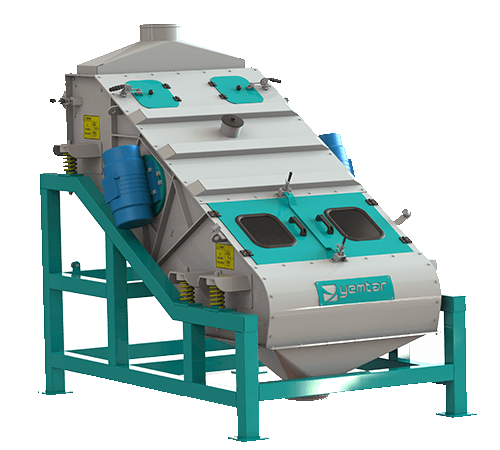
Vibro Screens provide the desired product size in the process by separating grain and powder in accordance with the desired capacity with different sieve pore options and different sieve widths using vibration technology.
Product Features
- High Screening Capacity.
- It has bolt connection structure, easy maintenance and disassembly.
- It has maintenance body covers that can be intervened at the time of sieving.
- It allows sieving in desired dimensions.
- Easy to install thanks to its compact structure.
- The vibro motors used can be adjusted according to the desired vibration.
Safety at Work
- Low voltage directive 2014/35/EU
- Machinery directive 2006/42/EC
- Electromagnetic compatibility directive 2014/30/EU
- Related Harmonized Standards : EN12100 – 1, EN12100 – 2, EN 14121-1, EN 287-1, EN 60204-1, EN 61000, EN 55011
Options
Single or double storey
Spare Parts
- Vibromotor
- Maintenance Covers
- Springs
Reasons for Preference
- Fast elimination
- Minimum waste of time
- Strong steel chassis
- Easy maintenance and operation
- Easy sieve change
- Low maintenance cost
DRUM SIEVE
Principle of Operation
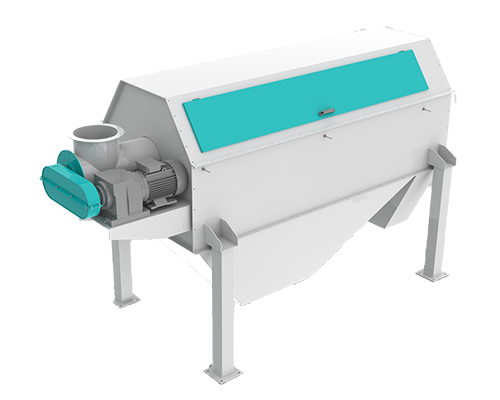
There is a circular screening system inside the body. The screen is fixed with a rotor shaft and driven by a motor. At the bottom of the body, there is a goods outlet hopper and a waste product hopper. It separates all kinds of coarse objects that may be in the semi-finished product. The angled structure of the screen allows the unwanted objects to slip through the screen and go to the waste product bunker. In this way, raw materials, semi-finished products and products can pass through the screen wire.
Product Features
- Sieve wire can be used in different sizes according to product diversity.
- Control covers are available on the body.
Safety at Work
Electromagnetic compatibility directive 2014/30/EU
Related Harmonized Standards : EN12100 – 1, EN12100 – 2, EN 14121-1, EN 287-1, EN 60204-1, EN 61000, EN 55011
Low voltage directive 2014/35/EU
Machinery directive 2006/42/EC
Options
- They can be manufactured in different sizes.
- Sieve sheet can be made of stainless steel.
- Multiple outlet system can be applied.
Spare Parts
- Bearings and Housings
- Chain and Sprocket
- Felt and Packing
- Sieve
Reasons for Preference
- Easy maintenance.
- Light and robust body.
- Maintenance covers.
- Easy replacement of sieves.
DRUM MAGNET
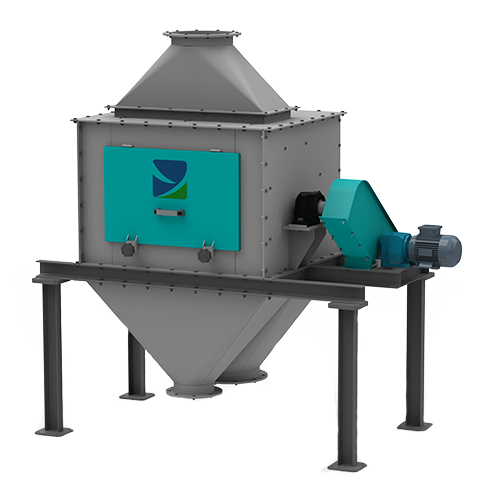
Principle of Operation
The metal parts in the powder or granular materials transported between the machines in the process are captured by magnets. The pointed tip in the body and its placement in the center of the flow pipe ensures that the metals in the incoming product are captured by the magnet. The captured metals are cleaned periodically through the maintenance cover on the body.
Product Features
- There are control covers against the magnets. These covers allow to control the product and metal waste.
- When the lid is opened, the magnet is taken out and provides ease of cleaning.
- No energy consumption as it is produced with natural magnets.
Safety at Work
- Low voltage directive 2014/35/EU
- Machinery directive 2006/42/EC
- Electromagnetic compatibility directive 2014/30/EU
- Related Harmonized Standards : EN12100 – 1, EN12100 – 2, EN 14121-1, EN 287-1, EN 60204-1, EN 61000, EN 55011
Options
They can be produced in different sizes.
Spare Parts
- Bearings and Housings
- Chain and Sprocket
Reasons for Preference
- Easy maintenance.
- Fast assembly and disassembly.
- Light and robust body.
- Very low energy consumption.
- Practical magnet replacement.
- Maintenance covers.
MISSILE MAGNET
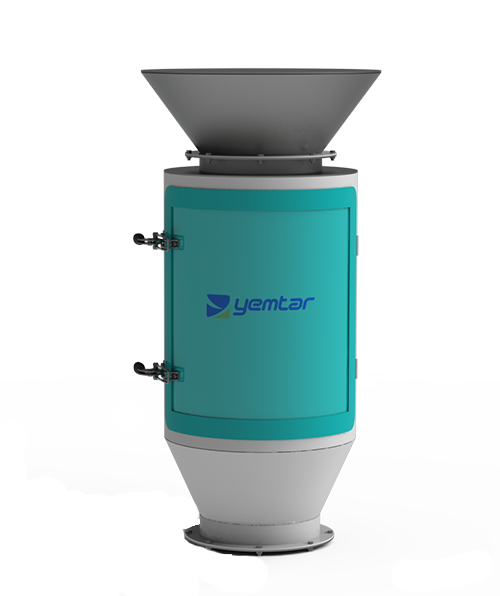
Principle of Operation
The metal parts in the powder or granular materials transported between the machines in the process are captured by magnets. The pointed tip in the body and its placement in the center of the flow pipe ensures that the metals in the incoming product are captured by the magnet. The captured metals are cleaned periodically through the maintenance cover on the body.
Product Features
- The magnet is placed on the lid that opens out.
- When the lid is opened, the magnet is taken out and provides ease of cleaning.
- No energy consumption as it is produced with natural magnets.
Safety at Work
Electromagnetic compatibility directive 2014/30/EU
Related Harmonized Standards : EN12100 – 1, EN12100 – 2, EN 14121-1, EN 287-1, EN 60204-1, EN 61000, EN 55011
Low voltage directive 2014/35/EU
Machinery directive 2006/42/EC
Options
- They can be produced in different sizes.
Spare Parts
- Bearings and Housings
- Magnet
Reasons for Preference
- Easy maintenance.
- Fast assembly and disassembly.
- Light and robust body.
- Capturing foreign objects that may enter the feed and removing them from the system.
Z MAGNET
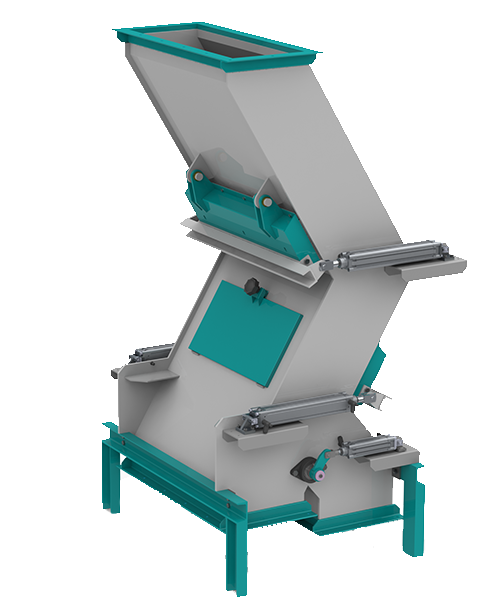
Principle of Operation
The product taken into the system enters from the upper hopper and spreads along the walls where the plate magnets are located due to its Z-shaped structure. Guiding slats in the sections where the magnets are located inside the body prevent the held metals from slipping. The magnets are controlled by a pneumatic piston outside the body. Product outlet and metal collection outlets are separated by a valve. After the product intake is completed, the magnets move away from the body with the valve. Metal parts coming out of the attraction area fall into the metal collection section and are separated from the product.
Product Features
- There are control covers against the magnets. These covers allow to control the product and metal wastes.
- The magnets are cleaned and controlled by pneumatic system.
- There is no energy consumption as it is produced with natural magnets.
Safety at Work
- Low voltage directive 2014/35/EU
- Machinery directive 2006/42/EC
- Electromagnetic compatibility directive 2014/30/EU
- Related Harmonized Standards : EN12100 – 1, EN12100 – 2, EN 14121-1, EN 287-1, EN 60204-1, EN 61000, EN 55011
Options
- They can be manufactured in different sizes.
- They can be manufactured as 2-storey or 3-storey.
Spare Parts
- Bearings and Housings
- Pistons and Valves
- Magnets
Reasons for Preference
- Easy maintenance.
- Fast assembly and disassembly.
- Light and robust body.
- Very little energy consumption.
- Practical magnet replacement.
U SPIRAL
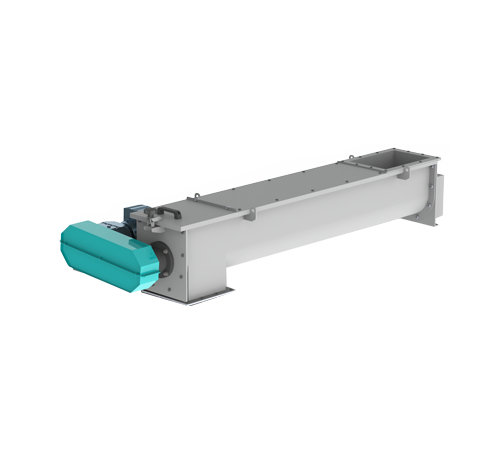
Principle of Operation
Screw conveyor is a conveyor that provides horizontal, angular and vertical conveying of raw materials and products in facilities such as feed, food, chemicals and fertilizers. The conveying process is carried out by the rotation of the rotor consisting of leaves arranged helically on a steel drawn pipe.
Product Features
- Coupling or sprocket system is used as power train.
- The thickness of the spiral leaves varies according to the intended use.
- Rotor pipe is made of thick walled steel drawn pipe.
- Bearing is made with special cast bearing on the drive side.
- Two conical roller bearings are used.
- The rotor is suspended with an intermediate bearing to prevent sagging, vibration and abrasion in long screws.
- They are used for conveying products with small grains and adhesive surface.
Safety at Work
Electromagnetic compatibility directive 2014/30/EU
Related Harmonized Standards : EN12100 – 1, EN12100 – 2, EN 14121-1, EN 287-1, EN 60204-1, EN 61000, EN 55011
Low voltage directive 2014/35/EU
Machinery directive 2006/42/EC
Options
- It can be manufactured from black sheet or stainless materials.
- Sheet thickness can be changed according to demand.
- Tour counter can be installed.
Spare Parts
- Bearings and Housings
- Chain Sprockets
- Belts and Pulleys
- Leaf and Rotors
Reasons for Preference
- Ease of maintenance and cleaning
- Less energy consumption
PIPE TYPE SPIRAL
Principle of Operation
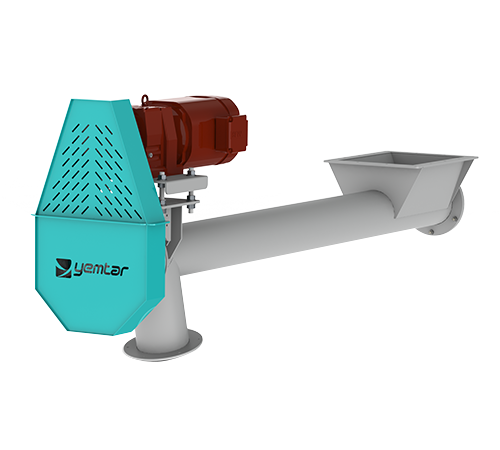
Screw conveyor is a conveyor that provides horizontal, angular and vertical conveying of raw materials and products in facilities such as feed, food, chemicals and fertilizers. The conveying process is carried out by the rotation of the rotor consisting of leaves arranged helically on a steel drawn pipe.
Product Features
- Coupling or sprocket system is used as power train.
- The thickness of the spiral leaves varies according to the intended use.
- Rotor pipe is made of thick walled steel drawn pipe.
- Bearing is made with special cast bearing on the drive side.
- Two conical roller bearings are used.
- The rotor is suspended with an intermediate bearing to prevent sagging, vibration and wear in long screws.
- They are mostly used for transportation of products with large grains.
Safety at Work
- Low voltage directive 2014/35/EU
- Machinery directive 2006/42/EC
- Electromagnetic compatibility directive 2014/30/EU
- Related Harmonized Standards : EN12100 – 1, EN12100 – 2, EN 14121-1, EN 287-1, EN 60204-1, EN 61000, EN 55011
Options
- It can be manufactured from black sheet or stainless materials.
- Sheet thickness can be changed according to demand.
- Tour counter can be installed.
Spare Parts
- Bearings and Housings
- Chain Sprockets
- Belts and Pulleys
- Leaf and Rotors
Reasons for Preference
- Ease of maintenance and cleaning.
- Product transfer with less dusting.
MOBILE CONVEYORS
Principle of Operation
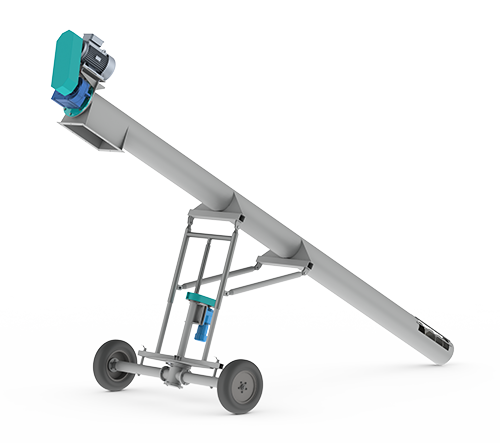
Mobile conveyors, which are produced in various diameters and sizes within Yemtar, are generally used to transport all kinds of powdery or granular materials such as cereals etc. from one place to another, to load and unload trucks.
Product Features
- It consists of 3 main parts: body, legs and drive system.
- The product entering from the receiving part of the body is transmitted to the pouring chamber by the inner auger.
- The motor is positioned on the product outlet hopper side.
- The ground height and angle of the main body can be adjusted automatically.
Safety at Work
Electromagnetic compatibility directive 2014/30/EU
Related Harmonized Standards : EN12100 – 1, EN12100 – 2, EN 14121-1, EN 287-1, EN 60204-1, EN 61000, EN 55011
Low voltage directive 2014/35/EU
Machinery directive 2006/42/EC
Options
- The main screw pipe can be manufactured from black sheet metal, galvanized sheet metal, AISI-304 or AISI-316 stainless sheet metal.
- They can be manufactured in different diameters and lengths.
Spare Parts
- Electric Motor
- Bearings and Housings
- Belt and Pulley
- Chain
Reasons for Preference
- Easy maintenance.
- The product to be transferred can be directed to the desired location instantly.
PNEUMATIC LIDS
Principle of Operation
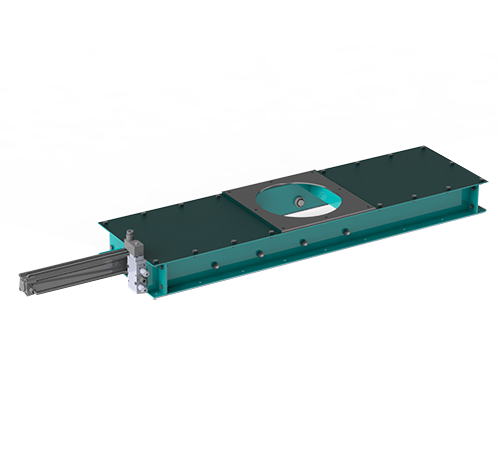
These are the products that perform the opening and closing process to control the entry and exit of finished or semi-finished products coming from silos or machines.
Product Features
- The drive is provided by a pneumatic cylinder.
- There is a special adapter system that provides sealing.
- The flow cutter sheet makes sliding movement on cylindrical pins and rolling bearings.
- The cover sheet moves perpendicular or angled to the direction of goods passage.
- There is a limit switch indicating closed-open positions.
Safety at Work
- Low voltage directive 2014/35/EU
- Machinery directive 2006/42/EC
- Electromagnetic compatibility directive 2014/30/EU
- Related Harmonized Standards : EN12100 – 1, EN12100 – 2, EN 14121-1, EN 287-1, EN 60204-1, EN 61000, EN 55011
Options
- It can be manufactured from black sheet, galvanized sheet, AISI-304 or AISI-316 stainless sheet material.
- There may be adapters on the top and bottom.
- Can be manufactured as manual and motorized.
Spare Parts
- Pneumatic Piston
- Bearings
Reasons for Preference
- Momentary interruption of product flow
- Bolted Structure
- Easy maintenance
- Fast assembly and disassembly
MANUAL LIDS
Principle of Operation
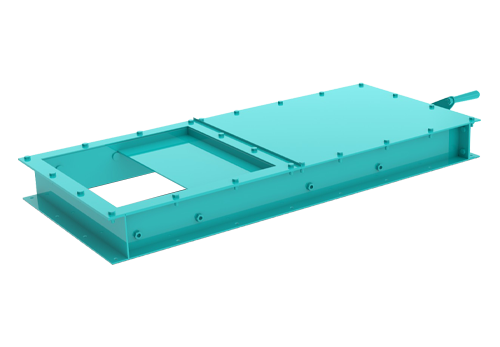
These are the products that perform the opening and closing process to control the entry and exit of finished or semi-finished products coming from silos or machines.
Product Features
- The drive is provided by hand.
- There is a special adapter system that ensures sealing.
- The flow cutter sheet makes sliding movement on cylindrical pins and rolling bearings.
- The cover sheet moves perpendicular or angled to the direction of goods passage.
- There is a limit switch indicating closed-open positions.
Safety at Work
Electromagnetic compatibility directive 2014/30/EU
Related Harmonized Standards : EN12100 – 1, EN12100 – 2, EN 14121-1, EN 287-1, EN 60204-1, EN 61000, EN 55011
Low voltage directive 2014/35/EU
Machinery directive 2006/42/EC
Options
- It can be manufactured from black sheet, galvanized sheet, AISI-304 or AISI-316 stainless sheet material.
- There may be adapters on the top and bottom.
Spare Parts
- Rotation Handle
- Bearings
Reasons for Preference
- They are preferred for product flow in places where the product flow is more continuous without interruption, in order to have product passage at a certain interval.
- Bolted Structure.
- Easy maintenance.
- Assembly and disassembly can be done quickly.
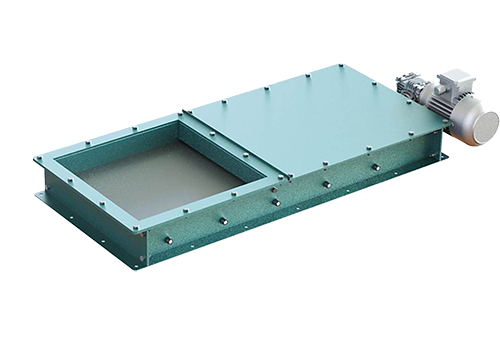
ELECTRIC LIDS
Principle of Operation
These are the products that perform the opening and closing process to control the entry and exit of finished and semi-finished products coming from silos or machines.
Product Features
- The drive is provided by a compact electric motor and piston with linear actuator.
- There is a special adapting system for sealing.
- The flow cutter sheet makes sliding movement on cylindrical pins and rolling bearings.
- The cover sheet moves perpendicular or angled to the direction of goods passage.
- There is a limit switch indicating closed-open positions.
Safety at Work
- Low voltage directive 2014/35/EU
- Machinery directive 2006/42/EC
- Electromagnetic compatibility directive 2014/30/EU
- Related Harmonized Standards : EN12100 – 1, EN12100 – 2, EN 14121-1, EN 287-1, EN 60204-1, EN 61000, EN 55011
Options
- It can be manufactured from black sheet, galvanized sheet, AISI-304 or AISI-316 stainless sheet material.
- There may be adapters on the top and bottom.
Spare Parts
- Piston with Electric Motor and Linear Actuator
- Bearings
Reasons for Preference
- Control of product flow at higher distances and where climatic conditions are colder.
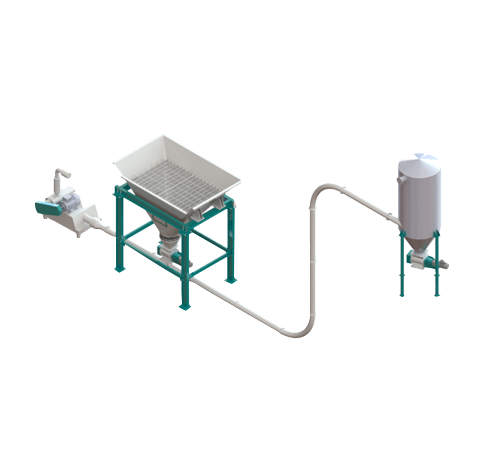
PNEUMATIC CONVEYING
Principle of Operation
Pneumatic conveying systems are used to transport powders, granules and other dry bulk materials through a closed pipeline. The driving force for this transportation is pressure or vacuum provided by gases such as air or nitrogen.
Product Features
- Modular design.
- Bolted structure, easy maintenance and disassembly.
- Material transfer is provided by sealed pipes.
- They are designed in the desired size and capacity.
- Product transportation can be directed in the desired direction.
Safety at Work
Electromagnetic compatibility directive 2014/30/EU
Related Harmonized Standards : EN12100 – 1, EN12100 – 2, EN 14121-1, EN 287-1, EN 60204-1, EN 61000, EN 55011
Low voltage directive 2014/35/EU
Machinery directive 2006/42/EC
Options
- They are made of black sheet metal or stainless steel.
Spare Parts
- Blower Pump
- Steel Pipes
- Airlock
Reasons for Preference
- Fast product transfer.
- Minimum time loss.
- Product is shipped in homogeneous form.
- Transportation pipes can be adjusted as desired.
- Takes up very little space.
- Low Maintenance Cost.
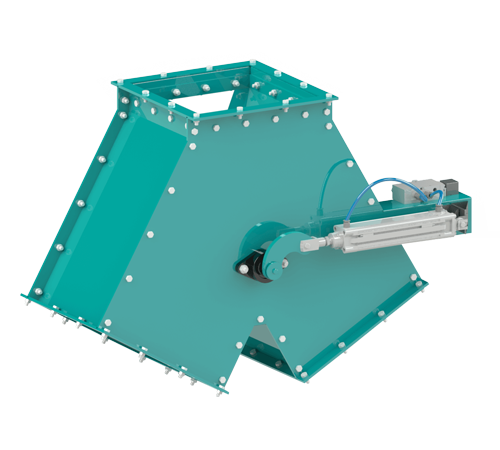
TWO WAY VALVE
Principle of Operation
They are the equipment used for the transportation of products to different points on a single line.
Product Features
- Bolted Structure
- Ability to move the product to different points in all directions
- 6 Bar working pressure
- Possibility to change direction during transportation
- Two-way product flow
Safety at Work
- Low voltage directive 2014/35/EU
- Machinery directive 2006/42/EC
- Electromagnetic compatibility directive 2014/30/EU
- Related Harmonized Standards : EN12100 – 1, EN12100 – 2, EN 14121-1, EN 287-1, EN 60204-1, EN 61000, EN 55011
Options
- It can be manufactured from stainless sheet material.
- It can be manufactured symmetrically and asymmetrically.
Spare Parts
- Bearing and Housing
- Pneumatic Piston
Reasons for Preference
- Fast direction change
- Flow control of powdery or granular products
- Easy assembly and disassembly
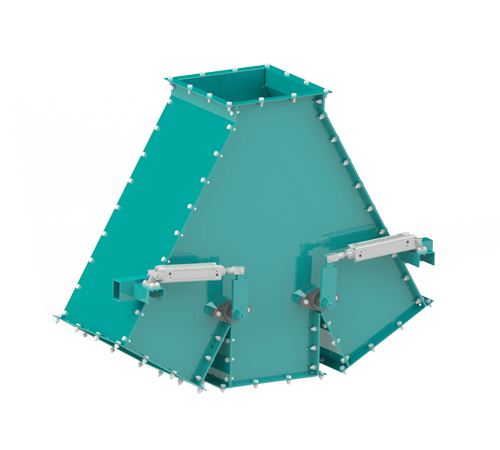
THREE WAY VALVE
Principle of Operation
They are the equipment used for the transportation of products to different points on a single line.
Product Features
- Bolted Structure
- Ability to move the product to different points in all directions
- 6 Bar working pressure
- Possibility to change direction during transportation
- Three-way product flow
Safety at Work
Electromagnetic compatibility directive 2014/30/EU
Related Harmonized Standards : EN12100 – 1, EN12100 – 2, EN 14121-1, EN 287-1, EN 60204-1, EN 61000, EN 55011
Low voltage directive 2014/35/EU
Machinery directive 2006/42/EC
Options
- It can be manufactured from stainless sheet material.
- It can be manufactured symmetrically and asymmetrically.
Spare Parts
- Bearing and Housing
- Pneumatic Piston
Reasons for Preference
- Fast direction change.
- Flow control of powdery or granular products.
- Easy assembly and disassembly.
MOTORIZED VALVE
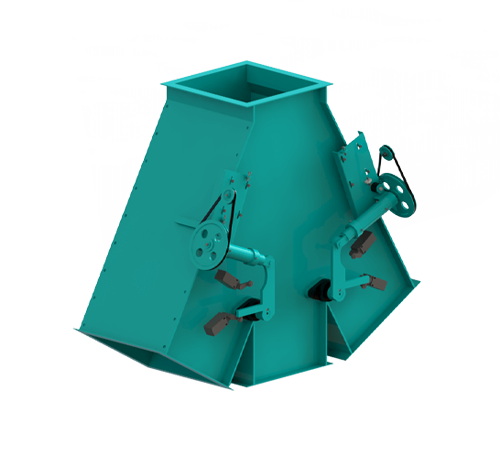
Principle of Operation
They are the equipment used for the transportation of products to different points on a single line.
Product Features
- Bolted Structure
- Move the product to different points in all directions
transportation capability - Possibility to change direction during transportation
- Three or two-way product flow
- Slower and more controlled change of direction
to be done in a way
Safety at Work
- Low voltage directive 2014/35/EU
- Machinery directive 2006/42/EC
- Electromagnetic compatibility directive 2014/30/EU
- Related Harmonized Standards : EN12100 – 1, EN12100 – 2, EN 14121-1, EN 287-1, EN 60204-1, EN 61000, EN 55011
Options
- It can be manufactured from stainless sheet material.
- It can be manufactured symmetrically and asymmetrically.
Spare Parts
- Bearing and Housing
- Belt and Pulley
Reasons for Preference
- More economical than pneumatic systems in high distance vertical product flows.
- Flow control of powder or granular products.
- Easy assembly and disassembly.
CHAIN CONVEYOR
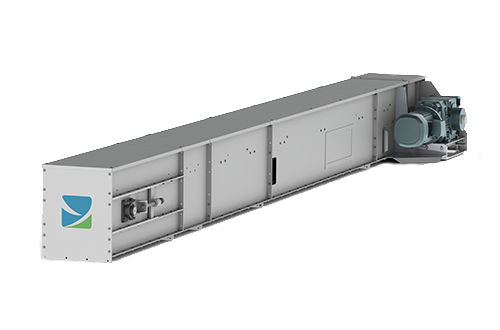
Principle of Operation
Chain Conveyor; It is a conveyor that allows raw materials and products to be transported horizontally and inclined to a certain degree in facilities such as feed, food, chemistry and fertilizer. It carries out the transportation process by dragging the goods with a special type chain that makes ring movement.
Product Features
- Drums and chain pins are heat treated.
- A coupling, hollow shaft reducer or chain gear is used as the power transmission organ.
- The idler drum is mounted in a sled with a bolted tensioning mechanism.
- The cases are bolted-flanged to each other.
- Chain links are made of forged steel.
Safety at Work
Electromagnetic compatibility directive 2014/30/EU
Related Harmonized Standards : EN12100 – 1, EN12100 – 2, EN 14121-1, EN 287-1, EN 60204-1, EN 61000, EN 55011
Low voltage directive 2014/35/EU
Machinery directive 2006/42/EC
Options
- It can be manufactured from galvanized, stainless or black sheet metal upon request.
- Sheet metal thickness can be changed upon request.
- Scrapers made of UHM 500 can be installed to reduce noise on chain links.
- A switch indicating goods transportation can be installed.
- A chain break switch can be installed.
- Hardox coating can be applied.
- Tivar coating can be applied to interior walls.
Spare Parts
- Bearings and Housings
- Chains and Gears
Reasons for Preference
- Easy to install since the drive drum is in two pieces.
- It has the ability to drive from both bottom and top.
ELEVATOR
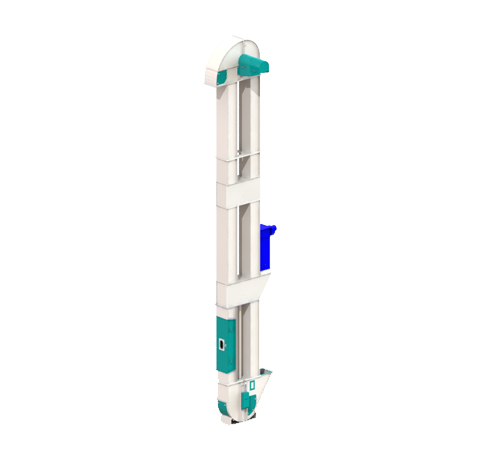
Principle of Operation
Bucket elevator; It is a carrier that provides vertical transmission of raw materials and products in feed, food, chemical and fertilizer plants. It carries out the transportation process with buckets mounted on a belt that makes a ring movement.
Product Features
- A direct coupled reducer system is used as the power transmission organ.
- The pipes are bolted-flange connected to each other.
- The idler drum is bedded in the sled with a bolted tensioning mechanism.
- A cord fabric belt suitable for the capacity is used.
- The buckets are plastic and have high flexibility and long life.
- The connection of the buckets to the belt is provided with bolts.
- There is a glass cover on the intermediate pipes for the purpose of controlling and intervening in the buckets.
- There is a filter cloth in the lower pipe and upper head to expel the air trapped inside.
- The lower drum is specially designed to prevent belt slippage.
- Hardox coating can be applied to the surfaces in contact with the product.
Safety at Work
- The bucket and the belt have high flexibility and strength.
Options
- It can be manufactured from galvanized or stainless materials.
- Sheet metal thickness can be changed upon request.
- Right-left sliding switch, drive drum backstop and revolution counter can be installed.
- Product inputs and outputs can be coated with Hardox or Tivar.
Spare Parts
- Bearings and Housings
- Bucket and Coco Bolt
- Tape
Reasons for Preference
- The bucket and the belt have high flexibility and strength.
BELT CONVEYOR
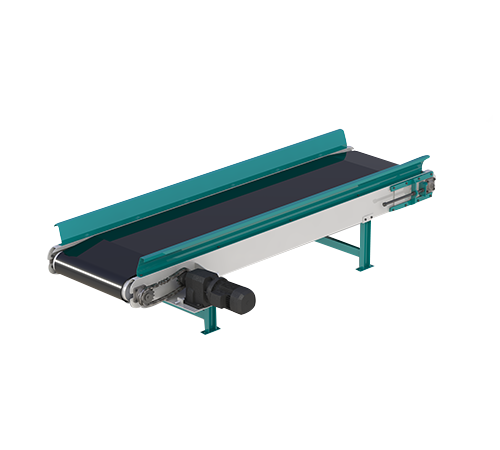
Principle of Operation
They are used to transport feed sacks or products that do not have a highly abrasive effect.
Product Features
- High strength.
- Resistance to bending effects.
- Adjustment device according to the desired belt tension.
Safety at Work
Electromagnetic compatibility directive 2014/30/EU
Related Harmonized Standards : EN12100 – 1, EN12100 – 2, EN 14121-1, EN 287-1, EN 60204-1, EN 61000, EN 55011
Low voltage directive 2014/35/EU
Machinery directive 2006/42/EC
Options
- They can be manufactured in different sheet thicknesses.
- They can be designed according to the desired dimensions.
- Chassis can be manufactured from St – 37 or AISI 304 stainless materials.
- Carrier band material can be PVC, rubber or polyurethane.
Spare Parts
- Bearings and Housings
- Belt
- Drum
- Chains and Gears
Reasons for Preference
- Low energy requirement
- Low cost
- Easy maintenance
- Low wear
RAW MATERIAL INTAKE FILTER
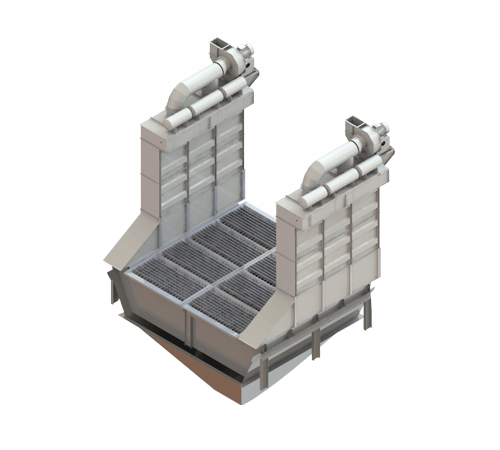
Principle of Operation
It is designed to minimize dusting in the raw material receiving dome.Dust collection units are mounted on the product pouring part at the level of the grill at the top of the raw material receiving dome.The fan connected to the machine vacuums the air through the filltre cloths.The flying dust sticks around the cloths with the vacuumed air.The air sent into the cloths at certain intervals with pulse valves shakes the cloths and ensures that the dust collected around them is returned to the system.
Product Features
- Vacuum is provided by snail type aspiration fan.
- There is an air tube that accumulates pressurized air.
- There is a reverse flow pulse valve system that shakes the bags.
Safety at Work
Electromagnetic compatibility directive 2014/30/EU
Related Harmonized Standards : EN12100 – 1, EN12100 – 2, EN 14121-1, EN 287-1, EN 60204-1, EN 61000, EN 55011
Low voltage directive 2014/35/EU
Machinery directive 2006/42/EC
Spare Parts
- Cloths
- Blast Valves
Reasons for Preference
- It brings products with economic value back into the system.
- Clean environment.
MILL FILTER
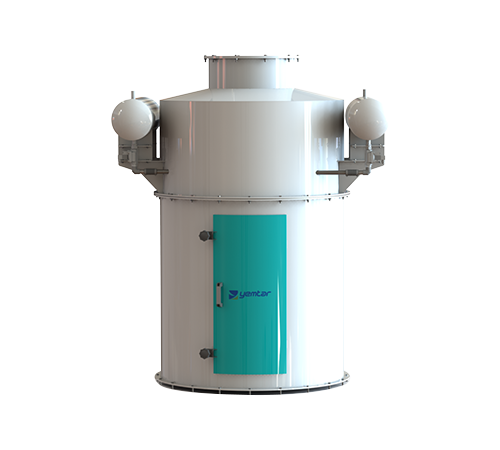
Principle of Operation
Mill filters, which are generally used in crushing lines, are installed in the lower hopper of the mill together with the mill, and the dust products that come out during the passage of the crushed product to the lower hopper are dragged by the fan connected to the filter and held by the filter cloths in the form of bags. The air compressed in the air tank is sprayed into the bags under pressure at certain intervals with pulse valves. Dust particles stuck in the bag are shaken and reused.
Product Features
- Vacuum is provided by snail type aspiration fan.
- There is an air tube that accumulates pressurized air.
- There is a reverse flow pulse valve system that shakes the bags.
Safety at Work
Electromagnetic compatibility directive 2014/30/EU
Related Harmonized Standards : EN12100 – 1, EN12100 – 2, EN 14121-1, EN 287-1, EN 60204-1, EN 61000, EN 55011
Low voltage directive 2014/35/EU
Machinery directive 2006/42/EC
Options
- Can be manufactured from black sheet or stainless materials.
- They can be manufactured in different sheet thicknesses.
Spare Parts
- Cloths
- Pulse Valve
- Fan
Reasons for Preference
- Products with economic value are reintroduced into the system.
- Provides a clean environment.
- They are preventive against dust explosions.
LOCAL FILTER
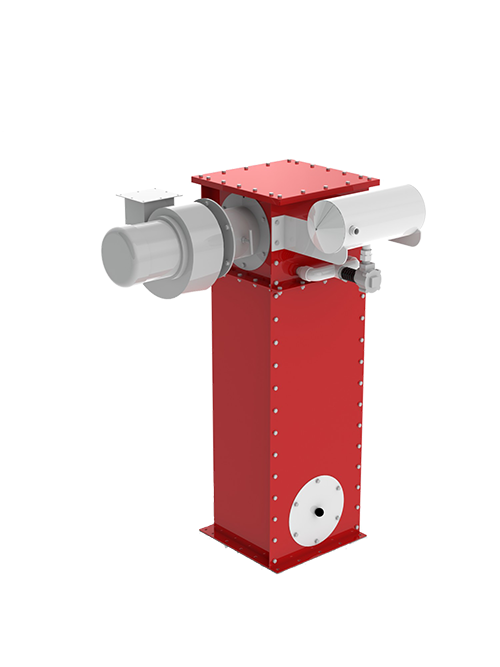
Principle of Operation
Local dust collection units are mounted on the bulk parts of machines such as elevators and chain conveyors where goods are transferred. The fan connected to the machine vacuums the air through the filter cloths. The flying dust sticks around the cloths together with the vacuumed air. The air, which is sent into the cloths at certain intervals with pulse valves, shakes the cloths and ensures that the dust collected around them is returned to the system.
Product Features
- Vacuum is provided by snail type aspiration fan.
- There is an air tube that accumulates pressurized air.
- There is a reverse flow pulse valve system that shakes the bags.
Safety at Work
Electromagnetic compatibility directive 2014/30/EU
Related Harmonized Standards : EN12100 – 1, EN12100 – 2, EN 14121-1, EN 287-1, EN 60204-1, EN 61000, EN 55011
Low voltage directive 2014/35/EU
Machinery directive 2006/42/EC
Options
- Sheet thicknesses can be changed.
- They can be manufactured in different sizes.
Spare Parts
- Filter Cloth
- Blast Valve
- Fan
Reasons for Preference
- Recycles products with economic value back into the system.
- Balanced equipment internal pressure.
- Clean environment.
JET FILTER
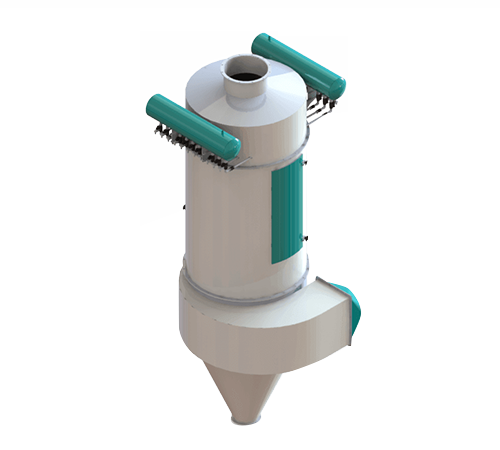
Principle of Operation
The air sucked in by the fan connected to the filter carries with it the dust useful for the feed. The air compressed in the air tank is sprayed into the bags pressurized at certain intervals by pulse valves. Dust particles stuck in the bag are shaken off and reused.
Product Features
- Vacuum is provided by snail type aspiration fan.
- There is an air tube that accumulates pressurized air.
- There is a reverse flow pulse valve system that shakes the bags.
Safety at Work
Electromagnetic compatibility directive 2014/30/EU
Related Harmonized Standards : EN12100 – 1, EN12100 – 2, EN 14121-1, EN 287-1, EN 60204-1, EN 61000, EN 55011
Low voltage directive 2014/35/EU
Machinery directive 2006/42/EC
Options
- It can be manufactured from black sheet or stainless materials.
Spare Parts
- Cloths
- Pulse Valve
Reasons for Preference
- Products with economic value are reintroduced into the system.
- Provides a clean environment.
CYCLONE
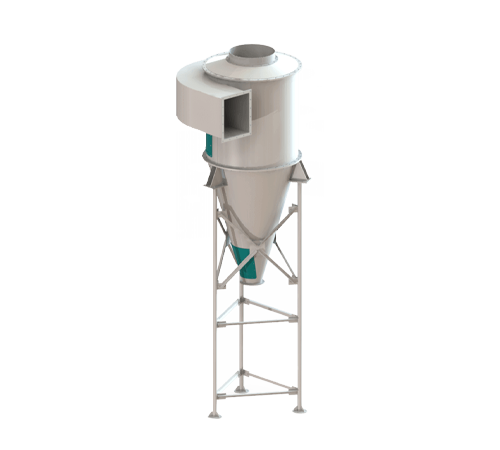
Principle of Operation
Cyclones are equipment that enables the recovery of dust before the product dust generated in the process reaches the filter or before the air sucked in the process is released into the atmosphere. The geometry formed due to the position of the fan connected to the upper outlet and the suction throat creates cyclonic movements in the body, the dust heavier than air is separated from the air and precipitated into the lower cone, while the air purified from dust is released into the atmosphere. In this way, environmental pollution and economic losses are prevented.
Product Features
- There are maintenance covers on the body.
- Cyclone legs can be manufactured in various shapes and can be placed on the platform without using legs.
- Adapters used in suction and outlet nozzles can be manufactured in different shapes and sizes according to the project.
Safety at Work
Electromagnetic compatibility directive 2014/30/EU
Related Harmonized Standards : EN12100 – 1, EN12100 – 2, EN 14121-1, EN 287-1, EN 60204-1, EN 61000, EN 55011
Low voltage directive 2014/35/EU
Machinery directive 2006/42/EC
Options
- It can be manufactured from black sheet, galvanized sheet, AISI-304 or AISI-316 stainless sheet material.
- Welded or bolted joining is applied according to the installation location.
- Sheet thicknesses can be changed.
Spare Parts
- Bolt
- Nut
Reasons for Preference
- Re-introduces products with economic value to the system.
- Provides a clean environment.
AIR LOCK
Principle of Operation
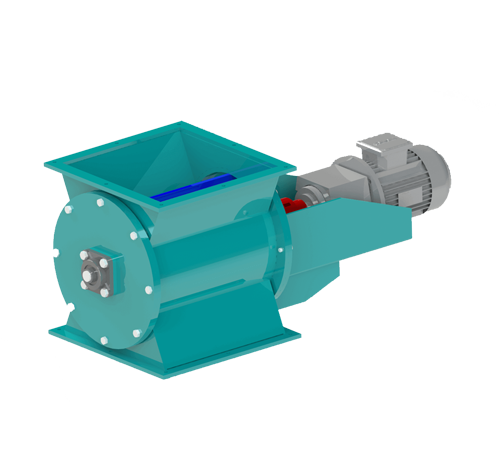
Airlocks are equipment used in feed, food, chemical and fertilizer plants to ensure a regular feed by preventing steam or air circulation in the flow lines of raw materials and products from affecting the previous steps in the process. It can be used in areas such as pellet press feed, cyclone dust outlets, under the screen.
Product Features
- The rotor shaft is mounted to the body with flanged bearings at the front and rear.
- Reducer and rotor shaft are connected with star coupling.
Safety at Work
Electromagnetic compatibility directive 2014/30/EU
Related Harmonized Standards : EN12100 – 1, EN12100 – 2, EN 14121-1, EN 287-1, EN 60204-1, EN 61000, EN 55011
Low voltage directive 2014/35/EU
Machinery directive 2006/42/EC
Options
- It can be manufactured from black sheet, galvanized sheet, AISI-304 or AISI-316 stainless sheet material.
- There can be adapters on the top and bottom.
- Sheet thicknesses can be changed.
- Can be produced with teflon or PE1000 scraper according to the place of use.
Spare Parts
- Coupling
- Bearings and Housings
Reasons for Preference
- Ensuring a steady flow of product and preventing air leaks.
MILL FEEDER
Principle of Operation
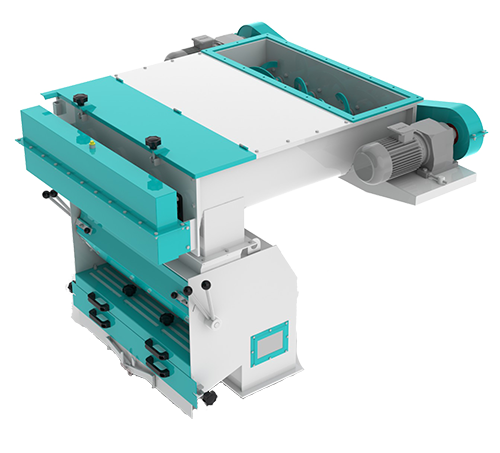
- The feeder consists of 2-4 augers working in conjunction with each other according to the feeder capacity.
- The amount of product to enter the crusher is adjusted by the motor drive.
- The covers at the bottom ensure that the goods falling from the augers into the feed hopper are spread and flow into the mill.
Product Features
- The augers are driven by chain and gear.
- The augers work in harmony with the gear.
- Metal parts are separated by the natural magnet in the outlet throat.
Safety at Work
Electromagnetic compatibility directive 2014/30/EU
Related Harmonized Standards : EN12100 – 1, EN12100 – 2, EN 14121-1, EN 287-1, EN 60204-1, EN 61000, EN 55011
Low voltage directive 2014/35/EU
Machinery directive 2006/42/EC
Options
- They can be manufactured with 2 or more feeder screws.
Spare Parts
- Bearing and Housing
- Sprocket and Chain
- Magnet
Reasons for Preference
- Controls the entry of goods into the mill.
- Prevents mill jamming.
- Reduces energy consumption.
HAMMER MILL
Principle of Operation
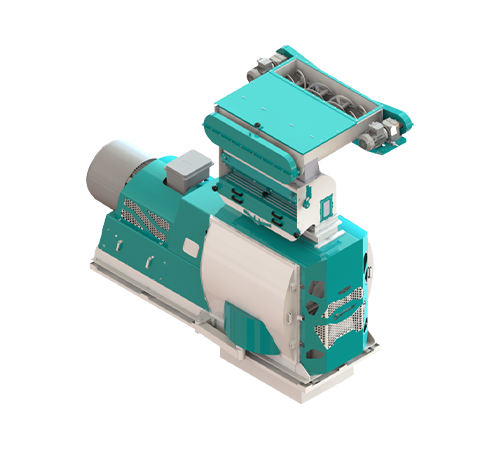
The product to be ground is regularly taken into the machine with the help of the feeder on the mill. The product is broken by the impact of the hammers and passes through the sieves and the desired grain size is obtained.
Product Features
- Vibration-free and silent operation.
- The body consists of two parts with bolted connection for easy assembly/disassembly of the rotor.
- Rotor can operate in both directions.
- There is a pneumatically controlled directional flap at the inlet opening.
- Special design for easy replacement of sieves and hammers.
- Covers are secured with limit switch.
- It is possible to take samples while the mill is running.
- Hammers are subjected to heat treatment.
- The rotor is mounted with SN type bearings on both sides.
- The body is connected to the frame with rubber wedges.
- Static-dynamic balance of the rotor was taken.
- Peripheral operating speeds vary according to capacity.
- Covers are articulated.
- Feeding speed can be adjusted by Feeder Driver according to product grinding resistance.
- There is a natural magnet in the feeder body.
Safety at Work
Electromagnetic compatibility directive 2014/30/EU
Related Harmonized Standards : EN12100 – 1, EN12100 – 2, EN 14121-1, EN 287-1, EN 60204-1, EN 61000, EN 55011
Low voltage directive 2014/35/EU
Machinery directive 2006/42/EC
Options
- Covers can be produced slide type.
- Temperature control can be provided.
- Crusher jaws can be included.
Spare Parts
- Bearing and Housing
- Hammer Shaft and Baguard
- Hammer
- Sieve
Reasons for Preference
- Provides high grinding capacity.
- The size of the product is adjusted by the sieve diameter.
- Their structures are simple and easy to use.
- Materials with high moisture capacity can be ground.
- They are used in various industries.
- Prevents mill jamming.
- Reduces energy consumption.
ROLLER MILL
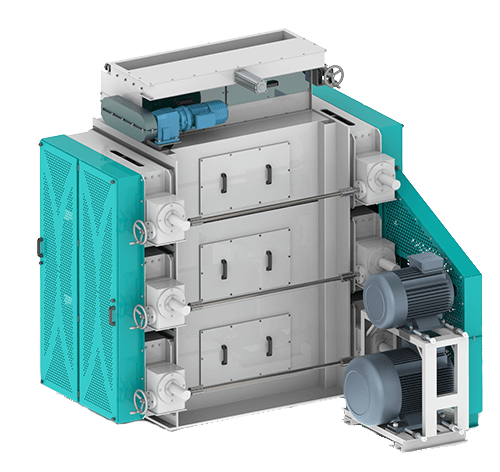
Principle of Operation
- The product taken from the feeding screw is evenly distributed between the rolls. The rolls are adjusted according to the desired grain size and the product is crushed. Depending on the capacity, crushing is performed in 1-3 layers with roll balls.
Product Features
- High quality rolls are cast, machined and ground in accordance with standards.
- Rolling bearings are placed in heavy duty bearing housings.
- Rolls are protected from impacts and shocks caused by foreign materials by means of springs.
- Rolls are driven by “V” belt.
- The system does not require ventilation.
- It is recommended for single type products.
Safety at Work
Electromagnetic compatibility directive 2014/30/EU
Related Harmonized Standards : EN12100 – 1, EN12100 – 2, EN 14121-1, EN 287-1, EN 60204-1, EN 61000, EN 55011
Low voltage directive 2014/35/EU
Machinery directive 2006/42/EC
Options
- Rolls can be manufactured with automatic control.
- They can be produced as two-storey and three-storey.
Spare Parts
- Bearing and Housing
- Waltz Balls
- Pulleys and Belts
- Sprocket and Chain
Reasons for Preference
- The size of the product is adjusted by roll balls.
- Less product heating.
- Less moisture loss.
- Less noise and stable operation.
- Minimum periodic maintenance.
- Optional full automation.
- Differential belt drive.
GRANULE MACHINE
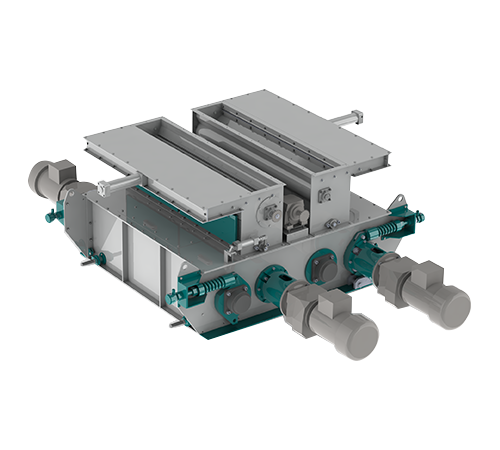
Principle of Operation
The product taken from the feeding screw is evenly distributed between the rolls. The rolls are adjusted according to the desired grain size and the product is crushed. Depending on the capacity, crushing is performed in 1-3 layers with roll balls.
Product Features
- The body is steel construction.
- Inside, there are moving roll balls that crush the product coming from the upper bunker.
- The number, diameter and length of the moving rolls vary according to the capacity.
- Roll gap can be adjusted mechanically/automatically according to the desired grain size.
- There is a sampling cover during operation.
- It has a regular feeding system.
- Granule can be removed from the circuit with by pass valve.
- It is flexible against impacts due to its structure.
- It crushes pellet feed between 1mm-4mm.
Safety at Work
Electromagnetic compatibility directive 2014/30/EU
Related Harmonized Standards : EN12100 – 1, EN12100 – 2, EN 14121-1, EN 287-1, EN 60204-1, EN 61000, EN 55011
Low voltage directive 2014/35/EU
Machinery directive 2006/42/EC
Options
- They can be manufactured according to different tonnages.
- Roll intervals can be adjusted automatically.
Spare Parts
- Bearing and Housing
- Coupling and Gear
- Waltz Balls
- Tension Spring and Bolts
Reasons for Preference
- Small grain feed is obtained by utilizing the advantages of pelletizing.
- By reducing the grain size of the feed, it facilitates the feeding of animals that cannot take large grain feeds.
- It provides uniform feed formation.
ROUND PREMIX UNIT
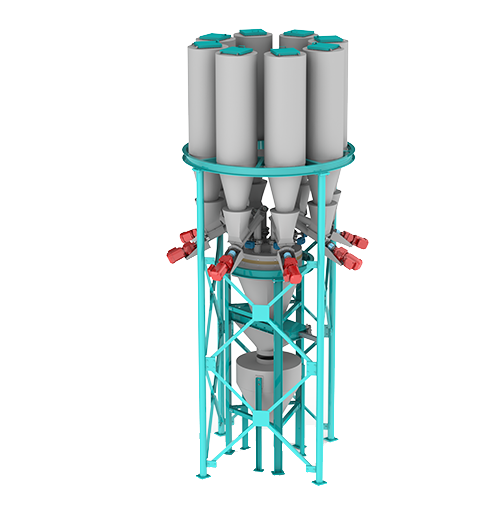
Principle of Operation
- Different minerals and vitamins in the silo are transported to the weighing hopper by means of augers. The augers work independently of each other and each product is weighed separately. The outlet of the weighing hopper is controlled by a pneumatic cover. The weighed product is taken to the bottom feed hopper. In this way, it shortens the waiting time of the mixer and ensures the continuity of the system.
Product Features
- Made of stainless steel.
- Dosing is provided automatically by recording the determined lists.
- Eliminates human errors that may occur in manual feeding.
Safety at Work
Electromagnetic compatibility directive 2014/30/EU
Related Harmonized Standards : EN12100 – 1, EN12100 – 2, EN 14121-1, EN 287-1, EN 60204-1, EN 61000, EN 55011
Low voltage directive 2014/35/EU
Machinery directive 2006/42/EC
Options
- Different silo numbers and capacities can be made.
Spare Parts
- Bearing and Housing
- Pneumatic Valve and Hose
- Coupling
Reasons for Preference
- Small grain feed is obtained by utilizing the advantages of pelletizing.
- PLC Controlled.
- Ration tracking.
- Eliminates human errors that may occur in manual feeding.
- Automatically performs the dosing process.
- Dosing process in different volumes
RECTANGULAR PREMIX UNIT
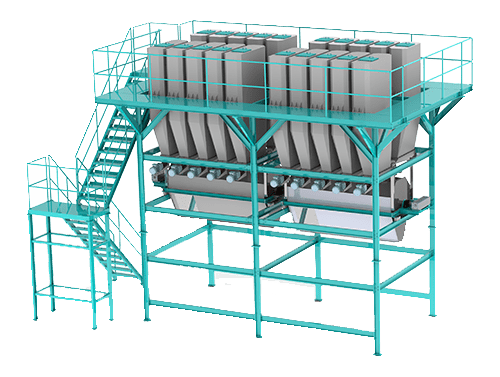
Principle of Operation
- Different minerals and vitamins in the silo are transported to the weighing hopper by means of augers. The augers work independently of each other and each product is weighed separately. The outlet of the weighing hopper is controlled by a pneumatic cover. The weighed product is taken to the bottom feed hopper. In this way, it shortens the waiting time of the mixer and ensures the continuity of the system.
Product Features
- Made of stainless steel.
- Dosing is provided automatically by recording the determined lists.
- It eliminates human errors that may occur in manual feeding.
Safety at Work
Electromagnetic compatibility directive 2014/30/EU
Related Harmonized Standards : EN12100 – 1, EN12100 – 2, EN 14121-1, EN 287-1, EN 60204-1, EN 61000, EN 55011
Low voltage directive 2014/35/EU
Machinery directive 2006/42/EC
Options
Different silo numbers and capacities can be made.
Spare Parts
- Bearing and Housing
- Pneumatic Valve and Hose
- Coupling
Reasons for Preference
- Small grain feed is obtained by utilizing the advantages of pelletizing.
- PLC Controlled.
- Ration tracking.
- Eliminates human errors that may occur in manual feeding.
- Automatically performs the dosing process.
- Dosing process in different volumes
SINGLE SHAFT MIXER
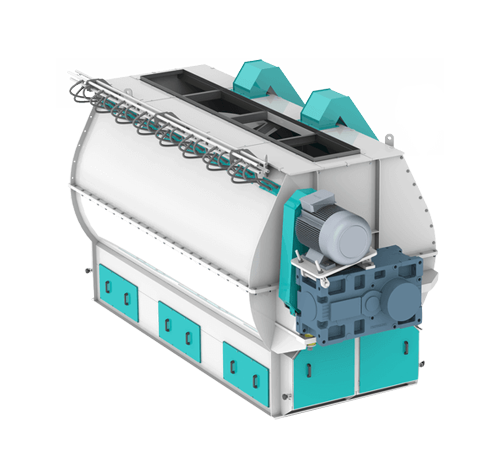
Principle of Operation
- The paddles on the rotor perform the mixing process. The paddle arrangement prevents the product in the mixer from sticking to the body and cleans the body by continuously scraping it.
Product Features
- Provides homogeneous mixing. Liquid addition unit is available.
- It has high mixing precision.
- Rotor has two-point bearing.
- Sealing system is available.
- Pneumatic discharge cover with locking mechanism.
- For easy assembly/disassembly, rotor arms are bolted on the pipe.
- Short mixing time.
Safety at Work
Electromagnetic compatibility directive 2014/30/EU
Related Harmonized Standards : EN12100 – 1, EN12100 – 2, EN 14121-1, EN 287-1, EN 60204-1, EN 61000, EN 55011
Low voltage directive 2014/35/EU
Machinery directive 2006/42/EC
Options
- They can be manufactured in different capacities.
- Pipes and nozzles can be added to allow liquid premixes and oils to be added to the mixture.
- Can be manufactured in stainless steel.
- The discharge cover can be made manually.
Spare Parts
- Pylons
- Reducer
- Bearings and Housings
- Pistons and Valves
Reasons for Preference
- Maximum homogeneous mixing.
- High production capacity.
- Fast discharge.
- No segregation during discharge.
- Minimum residue in the mixer.
- Short mixing time.
- Minimum wear and tear.
- Easy access for cleaning and maintenance.
- Simple and robust construction.
- Low energy consumption.
DOUBLE SHAFT MIXER
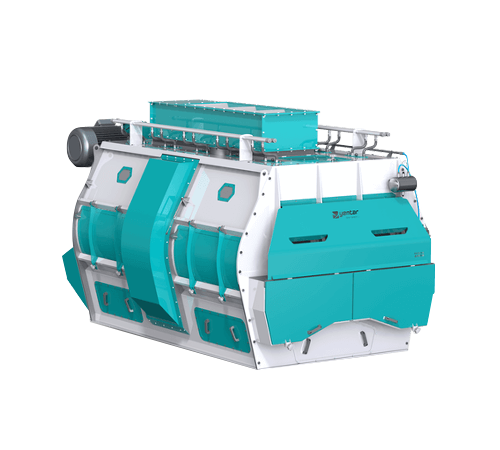
Principle of Operation
- There are 2 rotor shafts in the body and mixing paddles on it. The paddles accelerate the mixing process by pushing the products towards each other in terms of their angles and layout. Since the paddles are complementary to each other, they do not leave any unscanned area in the body.
Product Features
- It has a double rotor system.
- Machine body and rotor shaft are manufactured as stainless steel.
- Rotor shafts work synchronously with gear system.
Safety at Work
Electromagnetic compatibility directive 2014/30/EU
Related Harmonized Standards : EN12100 – 1, EN12100 – 2, EN 14121-1, EN 287-1, EN 60204-1, EN 61000, EN 55011
Low voltage directive 2014/35/EU
Machinery directive 2006/42/EC
Options
- They can be manufactured in different capacities.
- Pipes and nozzles can be added to allow liquid premixes and oils to be added to the mixture.
- Can be manufactured in stainless steel.
- The discharge cover can be made manually.
Spare Parts
- Pylons
- Reducer
- Gear Box
- Sprocket and Chain
- Pneumatic Valve and Piston
Reasons for Preference
- Maximum homogeneous mixing.
- High production capacity.
- Fast discharge.
- No segregation during discharge.
- Minimum residue in the mixer.
- Short mixing time.
- Minimum wear and tear.
- Easy access for cleaning and maintenance.
- Simple and robust construction.
- Low energy consumption.
RIBBON MIXER
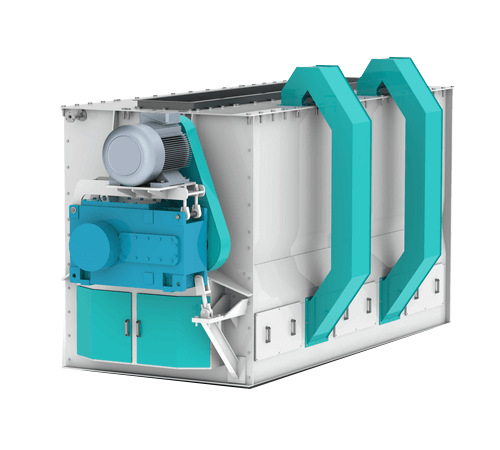
Principle of Operation
- Intertwined spiral mixing leaves, mounted on a single rotor in right/left winding, ensure the mixing of the product.
Product Features
- It has a double wound rotor.
- Liquid addition unit is available.
- Ribbon type rotor design provides homogeneous mixing.
- There is a ventilation pipe to ensure pressure balance.
- Pneumatic discharge cover with locking mechanism.
- Rotor-reducer is directly coupled and power transmission between motor and reducer is provided by belt and pulley mechanism.
Safety at Work
Electromagnetic compatibility directive 2014/30/EU
Related Harmonized Standards : EN12100 – 1, EN12100 – 2, EN 14121-1, EN 287-1, EN 60204-1, EN 61000, EN 55011
Low voltage directive 2014/35/EU
Machinery directive 2006/42/EC
Options
- They can be manufactured in different capacities.
- Pipes and nozzles can be added to allow liquid premixes and oils to be added to the mixture.
- Can be manufactured in stainless steel.
- The discharge cover can be made manually.
Spare Parts
- Reducer
- Belts and Pulleys
- Bearings and Housings
- Pneumatic Valve and Piston
Reasons for Preference
- Maximum homogeneous mixing.
- High production capacity.
- Fast discharge.
- No segregation during discharge.
- Minimum residue in the mixer.
- Short mixing time.
- Minimum wear and tear.
- Easy access for cleaning and maintenance.
- Simple and robust construction.
SINGLE SHAFT MOLASSES MIXER
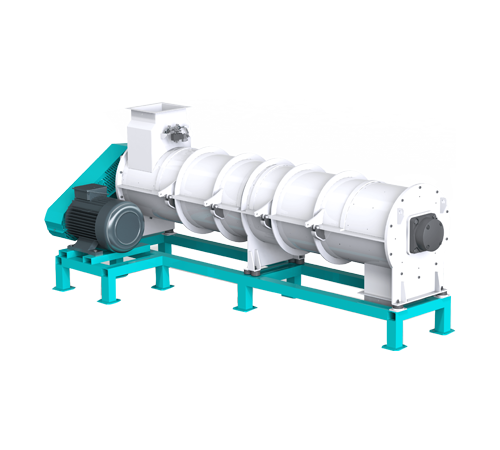
Principle of Operation
- As the powder product passes through the molasser, the liquid material is sprayed to ensure homogeneous mixing.
Product Features
- Ø (diameter) type body is made of St 37 or AISI 304 material, coated with a special product to prevent the product from sticking to the inner surface.
- It can be produced as single shaft paddle. Wide inlet covers are available.
- It mixes the liquid given between 1-11% homogeneously.
- Dimensions vary depending on the capacity.
- Homogeneous mixing is provided by heating molasses around 40-42°C.
- It works in continuous system and minimizes its vibration by taking dynamic and static balance.
Safety at Work
Electromagnetic compatibility directive 2014/30/EU
Related Harmonized Standards : EN12100 – 1, EN12100 – 2, EN 14121-1, EN 287-1, EN 60204-1, EN 61000, EN 55011
Low voltage directive 2014/35/EU
Machinery directive 2006/42/EC
Options
- They can be manufactured in different capacities.
- Tivar coating can be applied on the inner surfaces.
Spare Parts
- Reducer
- Belts and Pulleys
- Gears
- Padillar
Reasons for Preference
- Reduces unit cost.
- Provides homogeneous mixing thanks to adjustable paddles.
DOUBLE SHAFT MOLASSES MIXER
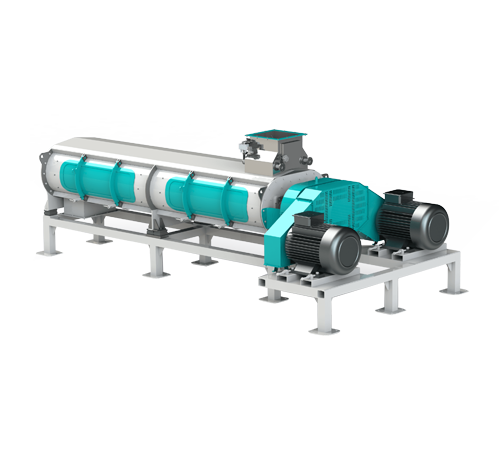
Principle of Operation
- As the powder product passes through the molasser, the liquid material is sprayed to ensure homogeneous mixing.
Product Features
- Ø (diameter) type body is made of St 37 or AISI 304 material, coated with a special product to prevent the product from sticking to the inner surface.
- It can be produced as single shaft paddle. Wide inlet covers are available.
- It mixes the liquid given between 1-11% homogeneously.
- Dimensions vary depending on the capacity.
- Homogeneous mixing is provided by heating molasses around 40-42°C.
- It works in continuous system and minimizes its vibration by taking dynamic and static balance.
Safety at Work
Electromagnetic compatibility directive 2014/30/EU
Related Harmonized Standards : EN12100 – 1, EN12100 – 2, EN 14121-1, EN 287-1, EN 60204-1, EN 61000, EN 55011
Low voltage directive 2014/35/EU
Machinery directive 2006/42/EC
Options
- They can be manufactured in different capacities.
- Tivar coating can be applied on the inner surfaces.
Spare Parts
- Reducer
- Belts and Pulleys
- Gears
- Pylons
Reasons for Preference
- Reduces unit cost.
- Provides homogeneous mixing thanks to adjustable paddles.
CONDITIONER
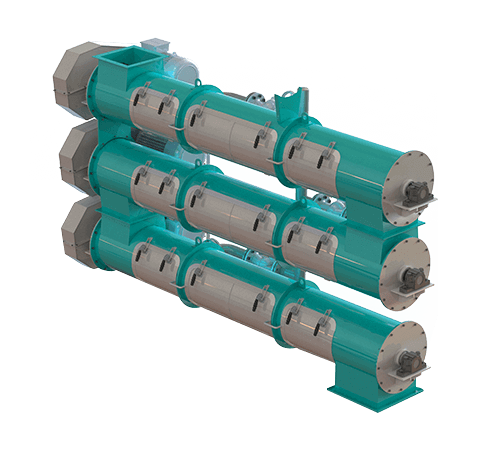
Principle of Operation
- Conditioners consist of 1-3 layers according to the capacity of the pellet press. It ensures that the steam and liquids given into the product penetrate homogeneously. It ensures that the product reaches the desired pan with adjustable paddles. It increases pelletizability by giving steam into the semi-finished product.
Product Features
- The body is made of AISI 304 chrome material.
- Belt pulley motor drive can change the stay time in the conditioner according to the product.
- Heat treated paddles can be adjusted.
- Feed steam is given from a single point with special design.
- Rotor is statically and dynamically balanced.
- The number and length of the conditioner can be changed according to the capacity.
Safety at Work
Electromagnetic compatibility directive 2014/30/EU
Related Harmonized Standards : EN12100 – 1, EN12100 – 2, EN 14121-1, EN 287-1, EN 60204-1, EN 61000, EN 55011
Low voltage directive 2014/35/EU
Machinery directive 2006/42/EC
Options
- Liquid can be added upon request.
- Internal coating to prevent sticking of the product.
Spare Parts
- Bearings and Housings
- Belts and Pulleys
- Steam Valves
- Pylons
Reasons for Preference
- Increases the moisture content of the product.
- Improves pellet quality.
- Improves digestibility.
DOUBLE CONDITIONER
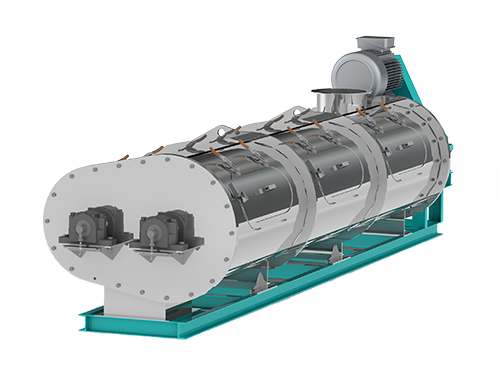
Principle of Operation
- With the Double Conditioner, steam is introduced into the semi-finished product to anneal it. Molasses, enzymes etc. liquid can be added to the conditioner. Different body diameters and shaft speeds ensure optimum mixing of feed with steam and liquid additions. With adjustable paddle angles, the waiting time of the feed in the conditioner can be adjusted. Gelatinization of product starch is provided under heat.
Product Features
- Mixing Capacity is 30 t/h.
- It is driven by 30 Kw motor.
- The reducer in special structure provides rotor rotations and synchronization at different speeds.
- The body is made of AISI 304 stainless material.
- The paddles are bolted and easy to disassemble, assemble and adjust.
- Wide maintenance covers on the body provide access to everywhere in the interior.
- The retention time of the feed in the conditioner is 90-120 seconds.
Safety at Work
Electromagnetic compatibility directive 2014/30/EU
Related Harmonized Standards : EN12100 – 1, EN12100 – 2, EN 14121-1, EN 287-1, EN 60204-1, EN 61000, EN 55011
Low voltage directive 2014/35/EU
Machinery directive 2006/42/EC
Options
- Liquid can be added upon request.
- Apparatus for cleaning steam pipes.
- Internal coating to prevent sticking of the product.
Spare Parts
- Bearings and Housings
- Conditioner Rotor
- Steam Valves
- Pylons
Reasons for Preference
- Increases the moisture content of the product.
- Improves pellet quality.
- Improves digestibility.
UPH
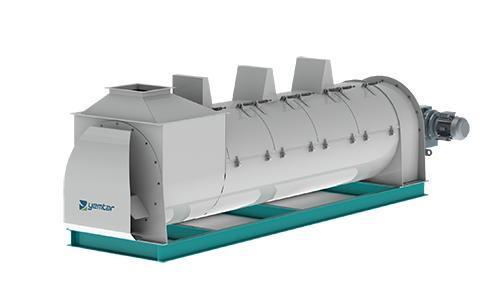
Principle of Operation
- Ultra Pelletizer is produced in different sizes according to the pellet press capacity. There is a condenser and feeding screw on the UPH. The products that are steam fed and heated in the conditioner are taken into the UPH. Here, it stays between the spiral leaves with slow movement for a certain period of time and takes heat on all surfaces of the body heated by steam. The product passes through the UPH machine under 80-85ºC temperature. Bacteria that may occur in the product passing through UPH are destroyed.
Product Features
- It is made of stainless steel.
- Rotor and spiral structure facilitates mixing and discharging of the product and leaves no residue.
- The body is made of double layers.
- The steam heat given between the layers is evenly distributed throughout the body.
- There is insulation coating around the body to prevent heat loss.
Safety at Work
Electromagnetic compatibility directive 2014/30/EU
Related Harmonized Standards : EN12100 – 1, EN12100 – 2, EN 14121-1, EN 287-1, EN 60204-1, EN 61000, EN 55011
Low voltage directive 2014/35/EU
Machinery directive 2006/42/EC
Options
- It can be manufactured in different sheet thicknesses and sizes.
Spare Parts
- Bearings and Housings
- Conditioner Rotor
- Steam Valves and Valves
- Chain and Sprocket
Reasons for Preference
- Driver is used in automation.
- Improves pellet quality.
- Improves digestibility.
- Kills the salmonella microbe.
- Allows the product to gelatinize.
PELPEAK
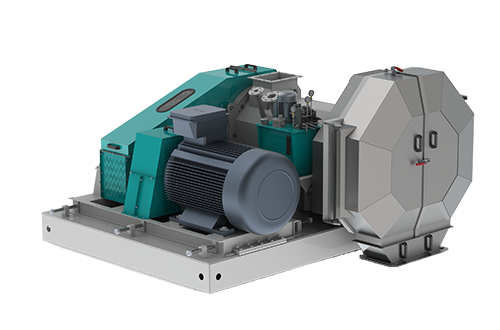
Principle of Operation
- Pelpeak is used in pallet units and fulfills two main purposes together. It increases pellet press efficiency, improves pellet quality and makes the feed suitable before palletizing. It consists of two main parts. The first part where materials such as oil, molasses, water and steam are blended by adding to the feed and the second part where the density of the feed is increased by compressing it before palletizing. The first section has double walls and its body is made of stainless steel sheet. The rotor is equipped with angle adjustable paddles. The feed, which passes through the first section by blending, is forced to pass through the rotating roller group in the second section and exit between the conical rings with adjustable spacing. In this way, the feed is compressed and concentrated at a certain rate. The adjustable rings are controlled by three hydraulic cylinders. The position of each cylinder is monitored by linear rulers mounted on the cylinders and continuous information can be obtained from the panel. Thus, it is automatically ensured that the gap quantities remain the same along the circumference of the rings.
Product Features
- It facilitates pelletizing.
- Controls are provided by automation. It is possible to add steam, oil, water, molasses etc. liquid.
- With adjustable paddles, the product can be kept in the mixing section for the specified time.
- High compression pressure.
Safety at Work
Electromagnetic compatibility directive 2014/30/EU
Related Harmonized Standards : EN12100 – 1, EN12100 – 2, EN 14121-1, EN 287-1, EN 60204-1, EN 61000, EN 55011
Low voltage directive 2014/35/EU
Machinery directive 2006/42/EC
Options
- It can be produced in different sizes.
Spare Parts
- Bearings and Housings
- Drive Belt
- Linear Ruler
- Pylons
- Rings and Rolls
Reasons for Preference
- Improves pellet quality.
- Increases homogeneity.
- More pellet production capacity.
- High pellet capacity.
OIL COATING
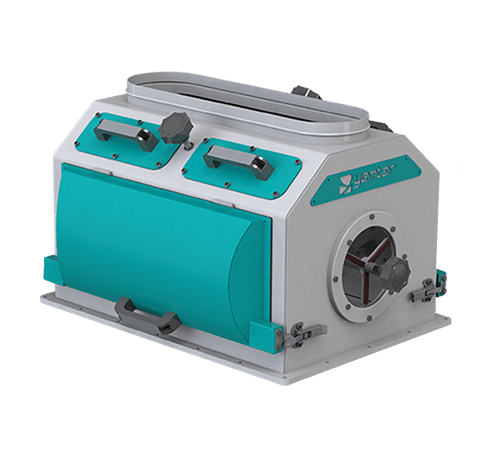
Principle of Operation
- In order to increase the pellet quality, the product weighed on the dosing scale passes through the lubrication chamber with the oil pumped from the daily oil tank with the oil pump, and the nozzles on the lubrication chamber spray this pumped oil on the product to lubricate the product.
Product Features
- It is made of St-37 material.
- Oil and air coming to the nozzles come from separate channels.
- Vegetable oil or animal oil is used.
- The oil temperature is 40°C on average. 3-5% oil can be given.
Safety at Work
Electromagnetic compatibility directive 2014/30/EU
Related Harmonized Standards : EN12100 – 1, EN12100 – 2, EN 14121-1, EN 287-1, EN 60204-1, EN 61000, EN 55011
Low voltage directive 2014/35/EU
Machinery directive 2006/42/EC
Options
- The dimensions can be changed according to the desired lubrication volume.
- Can be manufactured from stainless sheet material.
Spare Parts
- Pneumatic Equipment
- Nozzle
Reasons for Preference
- Lubrication at the desired rate
- Minimum waste of time
- Fast lubrication
- Easy maintenance and operation
- Improving pelletizing quality
PELLET PRESS WITH GEARBOX
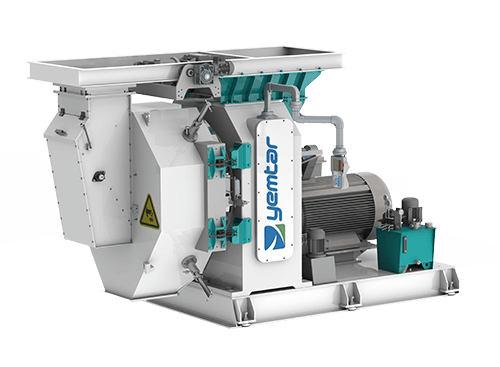
Principle of Operation
- The product is conveyed to the feeding screw, conditioner, double conditioner or pelpeak units. Here, the product, which is annealed with the addition of steam and liquid, is spread evenly between the rolls and the disk and pressed between 1.5 – 12 mm.
Product Features
- Compact body
- Much less space requirement compared to belt-driven pellet presses
- Bi-directional cover system
- Easy assembly and disassembly
Safety at Work
Electromagnetic compatibility directive 2014/30/EU
Related Harmonized Standards : EN12100 – 1, EN12100 – 2, EN 14121-1, EN 287-1, EN 60204-1, EN 61000, EN 55011
Low voltage directive 2014/35/EU
Machinery directive 2006/42/EC
Options
- Automatic lubrication
- Disk lifting apparatus (motorized-non-motorized)
- Disk slow rotation
- Hydraulic roll adjustment
Spare Parts
- Bearings and Housings
- Disc and Rolls
- Wear Ring
- Eccentric Shaft
- Adjustment Washer
- Dust Covers
- Safety Pin
Reasons for Preference
- Low maintenance cost.
- Shorter adjustment time with hydraulic roller adjustment system.
- Shorter downtime with disk slow rotation mechanism.
- Automatic lubrication system for main gear system, bearings and rollers.
- Motorized disk lifting system.
BELT PULLEY PELLET PRESS
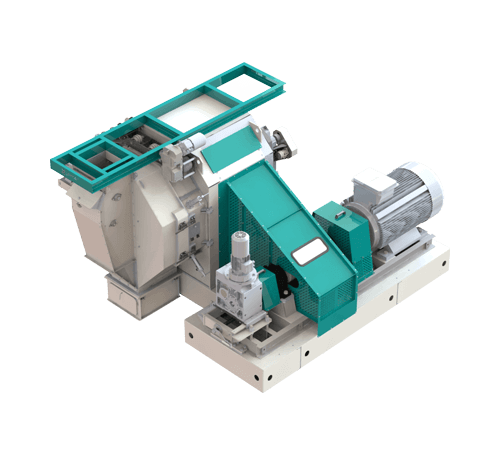
Principle of Operation
- The semi-finished product is conveyed to the conditioner, double conditioner or pelpeak units by the feeding screw. Here, the product softened by steam feeding is transferred to the pressing section. The product spread evenly between the rolls and the disk is pressed between 1.5-2 mm here. Pelletizing can be done in desired length with adjustable blades. Additional liquid input can be made to the machines used according to demand. The substances added to the product can be done manually or under automation control.
Product Features
- The main barrel creates a stable structure by bearing to the body from two different points.
- The main motor provides 98% efficiency by transferring the movement to the barrel with belt pulley.
- AISI 304 Chromium pelletizing cell has a natural magnet placed at the entrance of the pelletizing cell to prevent metal parts from entering the disc.
- Automatic or mechanical roller adjustment is available.
Safety at Work
Electromagnetic compatibility directive 2014/30/EU
Related Harmonized Standards : EN12100 – 1, EN12100 – 2, EN 14121-1, EN 287-1, EN 60204-1, EN 61000, EN 55011
Low voltage directive 2014/35/EU
Machinery directive 2006/42/EC
Options
- Automatic lubrication
- Disk lifting apparatus (motorized-non-motorized)
- Disk slow rotation
- Hydraulic roll adjustment
Spare Parts
- Bearings and Housings
- Disc and Rolls
- Wear Ring
- Eccentric Shaft
- Adjustment Washer
- Dust Covers
- Safety Pin
Reasons for Preference
- Provides convenience in transportation and storage.
- Increases digestibility.
- Prevents decomposition.
- Creates minimum loss during consumption.
- Provides more energy utilization per unit volume compared to powder feeds.
SINGLE LAYER COOLER
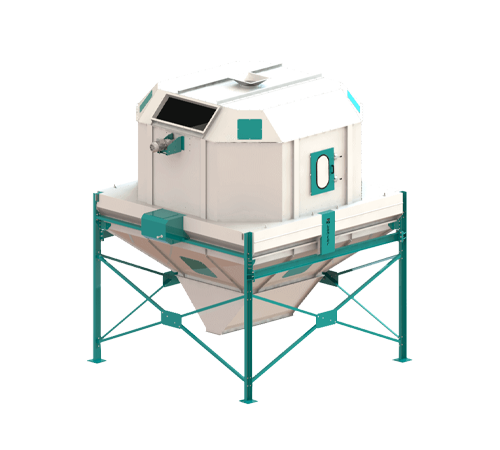
Principle of Operation
- At the base of the cooler there are grids that open and close, and in the body there are upper and lower level sensors that adjust the level of the product. The product passes through the airlock and fills up to the upper level sensor on the grids in the closed position on the base. As the product flows through the grids, air enters from the lower chamber and hot air is sucked from the upper chamber with the aspiration system, this process allows the product to cool down from the lower section to the upper section. When the product reaches the lower level sensor, the grids are closed, while the product filling continues.
Product Features
- Lower body side plates are specially designed for fresh air intake.
- The lower grille is designed to allow air intake.
- Bottom grille can be motorized, pneumatically or hydraulically driven.
- Body sheets are bolt and nut connected for easy assembly/disassembly.
Safety at Work
Electromagnetic compatibility directive 2014/30/EU
Related Harmonized Standards : EN12100 – 1, EN12100 – 2, EN 14121-1, EN 287-1, EN 60204-1, EN 61000, EN 55011
Low voltage directive 2014/35/EU
Machinery directive 2006/42/EC
Options
- They can be manufactured in different shapes and cooling volumes.
Spare Parts
- Bearings and Housings
- Pneumatic Pistons and Valves
Reasons for Preference
- Provides efficient and fast cooling.
- Discharge amount can be adjusted.
- Minimum deformation of the product to be cooled.
DOUBLE LAYER COOLER
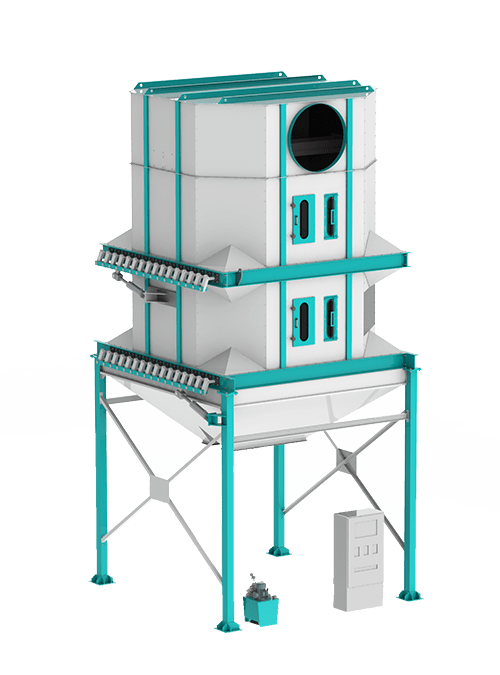
Principle of Operation
- It is designed to eliminate waiting time for facilities with frequent product transitions. There are panel grids on the upper and lower floor base of the cooler and lower and upper level sensors that adjust the product level of each floor. The goods pass through the airlock and fill up to the upper level sensor on the grids in the closed position on the base. Air enters through the holes on the panels and hot air is sucked from the upper chamber with the aspiration system, this process allows the goods to cool down from the lower section to the upper section. When the product reaches the lower level sensor, the grids are closed, while the product filling continues.
Product Features
- Lower body side plates are specially designed for fresh air intake.
- The lower grille is designed to allow air intake.
- Bottom grille can be motorized, pneumatically or hydraulically driven.
- Body sheets are bolt and nut connected for easy assembly/disassembly.
Safety at Work
Electromagnetic compatibility directive 2014/30/EU
Related Harmonized Standards : EN12100 – 1, EN12100 – 2, EN 14121-1, EN 287-1, EN 60204-1, EN 61000, EN 55011
Low voltage directive 2014/35/EU
Machinery directive 2006/42/EC
Options
- They can be manufactured in different shapes and cooling volumes.
Spare Parts
- Bearings and Housings
- Pneumatic Pistons and Valves
Reasons for Preference
- Provides efficient and fast cooling.
- Discharge amount can be adjusted.
- Minimum deformation of the product to be cooled.
EXTRUDER
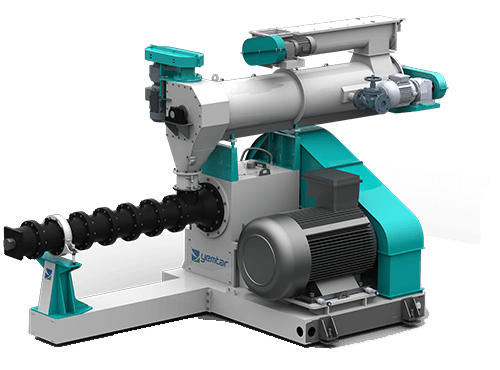
Principle of Operation
- There are conditioner, feed screw and vertical screw on the extruder. The crushed soybean taken into the conditioner with the feeding screw is heated by feeding steam. It is sent into the hive with pressure through the vertical auger. Soybean is cooked by generating heat through friction in the hive.
Product Features
- Extruder capacity 6-8 t/h (steam) is driven by 250 Kw main motor.
- Barrel and screw groups are made of alloy steel and hardened by heat treatment.
- A temperature of 160 °C is reached at the barrel outlet.
Safety at Work
Electromagnetic compatibility directive 2014/30/EU
Related Harmonized Standards : EN12100 – 1, EN12100 – 2, EN 14121-1, EN 287-1, EN 60204-1, EN 61000, EN 55011
Low voltage directive 2014/35/EU
Machinery directive 2006/42/EC
Options
- They can be produced in different sizes.
Spare Parts
- Bearings and Housings
- Hives
- Belts
- Spiral group
- Goods outlet nozzle
- Main Spindle
- Safety Pin
Reasons for Preference
- High cooking rate in a short time.
- Eliminating the negative effects of antinutrient factors.
DRUM COOLER
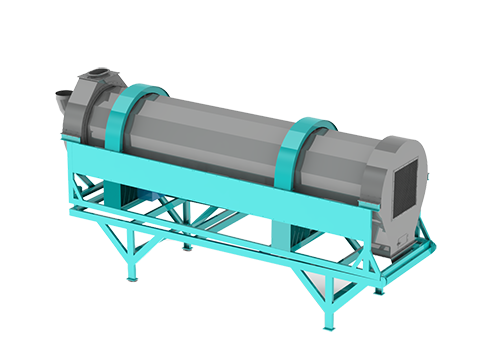
Principle of Operation
- Drum coolers, consisting of a cooling drum, inlet and outlet hoods, chassis assembly, are equipment that allows the products manufactured especially by extrusion to cool down by giving the initial temperature to the atmosphere. With the rotation of the drum, which is rotated at low speed by a gearmotor, is mounted on the chassis at both ends and has fixed fins on the inner surface, the hot product inside moves and changes position. The hot air removed from the drum with the help of the fan assembly connected to the inlet hood is released to the atmosphere, thus cooling the product.
Product Features
- The rotational speed of the drum can be changed by changing the size of the gear that drives the housing.
- The machine inclination can be changed to increase the extruded material holding time in the drum cooler and to change the installation areas.
- It is usually used in extrusion process lines immediately after the extrusion machine.
- The drum cooler is fixed on both sides with SNL type bearings.
- The average holding time of hot extruded material in the drum cooler is about 4~5 minutes.
- The targeted final temperature of the material leaving the drum cooler is about 40~55°C.
Safety at Work
Electromagnetic compatibility directive 2014/30/EU
Related Harmonized Standards : EN12100 – 1, EN12100 – 2, EN 14121-1, EN 287-1, EN 60204-1, EN 61000, EN 55011
Low voltage directive 2014/35/EU
Machinery directive 2006/42/EC
Options
- It can be manufactured from black sheet or stainless sheet material.
- Fan pressure and flow rate can be changed.
Spare Parts
- Electric Motor
- Bearings and Housings
- Fan
- Chain
- Nozzle
Reasons for Preference
- Easy maintenance.
- Fast and high quality cooling.
- In some chemical processes, it can also be used as a dryer with the addition of a combustion chamber with a burner.
- Easy assembly and disassembly
SEAM TAPE
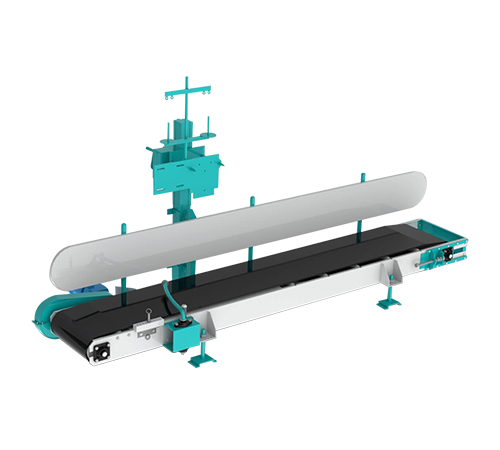
Principle of Operation
- It is the carrier system that allows the weighed and bagged products to be sewn and aligned for loading.
Product Features
- Sack tipping device
- Belt tensioning device
- Chassis stabilizer legs
- Manually adjustable seam band height
- 650 – 700 sack mouth sewing capacity per hour
Safety at Work
Electromagnetic compatibility directive 2014/30/EU
Related Harmonized Standards : EN12100 – 1, EN12100 – 2, EN 14121-1, EN 287-1, EN 60204-1, EN 61000, EN 55011
Low voltage directive 2014/35/EU
Machinery directive 2006/42/EC
Options
- They can be produced in different sizes.
Spare Parts
- Bearings and Housings
- Spool and Drum
- Chain and Sprockets
Reasons for Preference
- High capacity sack mouth sewing process.
- Fast and precise sewing.
TELESCOPIC LOADING BELT
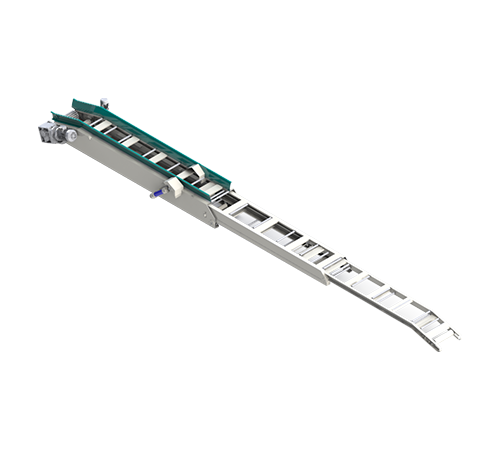
Principle of Operation
- These are systems that can be nested in the loading sections of the factories in order to facilitate the placement of long vehicles from start to finish in the body lengths of the long vehicles and to save space.
Product Features
- Thanks to hydraulic pistons, they can be raised and lowered according to the height of the vehicle to be loaded.
- It has a loading range of 8.5 mt depending on its ability to extend and shorten horizontally.
- Chassis balance legs.
- Thanks to the proxies that limit the take-off and landing of the pistons, the maximum take-off and landing positions can be limited according to the user’s request during installation.
- The operation of the band, the piston descent and ascent, the extension and shortening of the band can optionally be controlled remotely by wireless control.
Safety at Work
Electromagnetic compatibility directive 2014/30/EU
Related Harmonized Standards : EN12100 – 1, EN12100 – 2, EN 14121-1, EN 287-1, EN 60204-1, EN 61000, EN 55011
Low voltage directive 2014/35/EU
Machinery directive 2006/42/EC
Options
- They can be produced in different sizes.
Spare Parts
- Bearings and Housings
- Spool and Drum
- Chain and Sprockets
Reasons for Preference
- Minimum staffing requirements
- Fast and precise sewing.
- Ability to place sacks at the desired height.
CAMELNECK SEAM TAPE
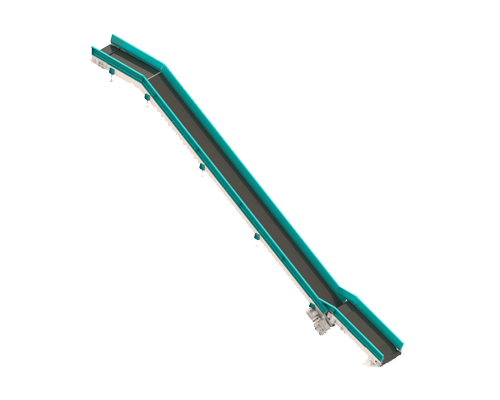
Principle of Operation
- The camel neck sewing belt is used to add a certain height to the loading after the sewing belt, unlike the standard belt system, it is not linear. It can be driven by chain transmission from the same drive system as the sewing belt, this allows two separate belts to transport at the same speed. It is designed to facilitate the correct placement of vehicles from start to finish in the case lengths of the vehicles in the loading departments of the factories.
Product Features
- Sack tipping device
- Belt tensioning device
- Chassis stabilizer legs
- Manually adjustable seam band height
- 650 – 700 sack mouth sewing capacity per hour
- Intermediate rolls
Safety at Work
Electromagnetic compatibility directive 2014/30/EU
Related Harmonized Standards : EN12100 – 1, EN12100 – 2, EN 14121-1, EN 287-1, EN 60204-1, EN 61000, EN 55011
Low voltage directive 2014/35/EU
Machinery directive 2006/42/EC
Options
- They can be produced in different sizes.
Spare Parts
- Bearings and Housings
- Spool and Drum
- Chain and Sprockets
Reasons for Preference
- High capacity sack mouth sewing process.
- Ability to place sacks at the desired height.
- Fast and precise sewing.
SINGLE CANTAR
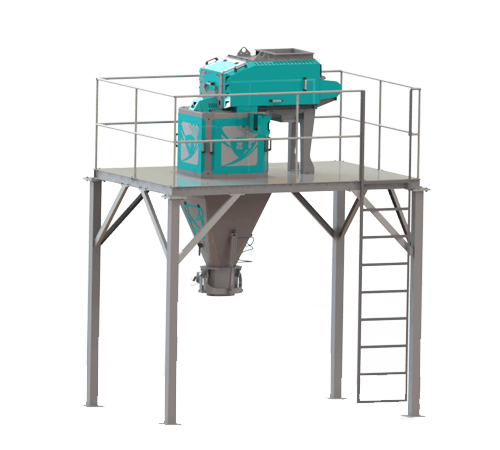
Principle of Operation
- The machine is placed under the silo and warehouse. The goods taken from the warehouse are transferred to the goods weighing pan with an automatic belt system. When the value determined between 25/50 kg. is reached in the pan, the system automatically stops feeding. The pneumatic bottom covers of the pan are opened and the product is filled into the sack which is compressed by the operator in the lower hopper mouth.
Product Features
- The body is made of St 37 material.
- Last bag weight, total number of bags and total weight can be seen from the control panel.
- The scale self-corrects the errors that occur.
- In case of power outages, the scale resumes from where it left off.
- Scale sensitivity is ±50 gr. for the sack.
- Special belt is used to feed the product to the scale.
- There is a pneumatic sack squeezing device in the lower hopper.
- PLC controlled.
- Daily values can be deleted when desired, but general totals can only be deleted within authorization.
- Failures occurring in the scale can be seen on the control panel. The scale sack capacity is 8 pieces per minute in singles.
- There is a reciprocating goods cutter after precise weighing in the upper body.
- There are pneumatic covers for holding and discharging the product in the pan.
- Power transmission to the belt is transferred from the reducer with belt pulley assembly.
Safety at Work
Electromagnetic compatibility directive 2014/30/EU
Related Harmonized Standards : EN12100 – 1, EN12100 – 2, EN 14121-1, EN 287-1, EN 60204-1, EN 61000, EN 55011
Low voltage directive 2014/35/EU
Machinery directive 2006/42/EC
Options
- Sewing Tape
- Automatic sack attachment apparatus
- Sack vibroser
- The carrier tape material can be PVC, rubber or polyurethane.
Spare Parts
- Bearings and Housings
- Tape
- Drive Belt
- Wedge and Belt
- Sack Squeezing
- Load Cell
Reasons for Preference
- Provides precise and fast weighing.
DOUBLE CANTAR
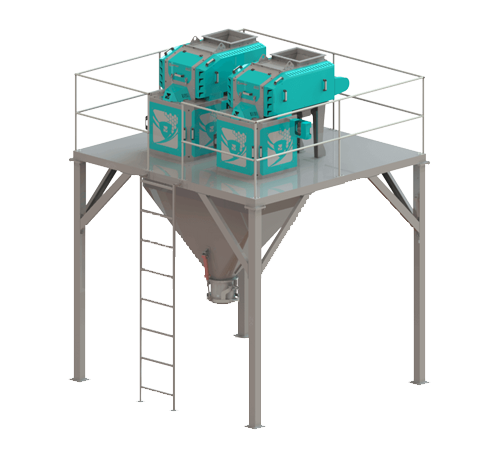
Principle of Operation
- The machine is placed under the silo and warehouse. The goods taken from the warehouse are transferred to the goods weighing pan with the automatic belt system. When the value determined between 25/50 kg. is reached in the pan, the system automatically stops feeding. The pneumatic bottom covers of the pan are opened and the product is filled into the sack which is compressed by the operator in the lower hopper mouth.
Product Features
- The body is made of St 37 material.
- Last bag weight, total number of bags and total weight can be seen from the control panel.
- The scale self-corrects the errors that occur.
- In case of power outages, the scale continues from where it left off. The scale sensitivity is ±50 gr. for the sack.
- A special belt is used to feed the product to the pan. There is a pneumatic sack tightening device in the lower hopper.
- Daily values can be deleted when desired, but general totals can only be deleted within authorization.
- Failures occurring in the scale can be seen on the control panel.
- Scale sack capacity is 12 pieces per minute in doubles.
- There is a reciprocating goods cutter in the upper body after precise weighing.
- There are pneumatic covers to hold and discharge the product in the pan.
- Power transmission to the belt is transferred from the reducer by belt and pulley device.
Safety at Work
Electromagnetic compatibility directive 2014/30/EU
Related Harmonized Standards : EN12100 – 1, EN12100 – 2, EN 14121-1, EN 287-1, EN 60204-1, EN 61000, EN 55011
Low voltage directive 2014/35/EU
Machinery directive 2006/42/EC
Options
- Sewing Tape
- Automatic sack attachment apparatus
- Sack vibroser
- The carrier tape material can be PVC, rubber or polyurethane.
Spare Parts
- Bearings and Housings
- Tape
- Drive Belt
- Wedge and Belt
- Sack Squeezing
- Load Cell
Reasons for Preference
- Provides precise and fast weighing.
SPIRAL SCALE
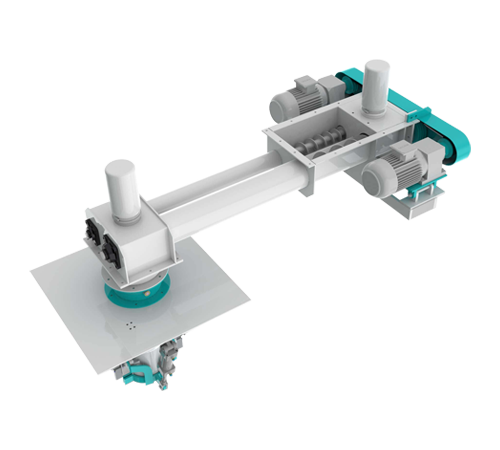
Principle of Operation
- The product to be weighed is stored in the upper hopper, then the filling process starts in the auger hopper with the opening of the pneumatic cover on the scale and the augers, one with high and one with low product carrying capacity, operate simultaneously, In the last precision dosing process, the auger with high product carrying capacity stops and the auger with less product carrying capacity continues to work, filling the sack, which is held by the compactor nozzle connected to the pneumatic pistons in the lower pan, so that the desired weighing ratio is obtained in the last state of the precision dosing process.
Product Features
- Weighing in a sack
- PLC Controlled System
- Precision Measurement
- Dust-free environment with filter cloths at the inlet and outlet of the product
- Weighing of products with smaller grains
Safety at Work
Electromagnetic compatibility directive 2014/30/EU
Related Harmonized Standards : EN12100 – 1, EN12100 – 2, EN 14121-1, EN 287-1, EN 60204-1, EN 61000, EN 55011
Low voltage directive 2014/35/EU
Machinery directive 2006/42/EC
Options
- It can be manufactured from black sheet or stainless sheet material.
- Sheet thicknesses can be changed.
Spare Parts
- Bearings and Housings
- Chain and Sprocket
- Load Cell
- Pneumatic Piston
- Filter Cloths
Reasons for Preference
- Ease of use.
- Weighing of sacks of different sizes can be performed.
- Prevention of labor losses.
BİGBAG FILLING SCALE
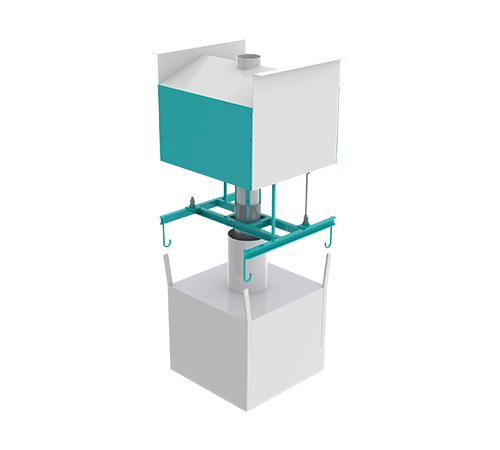
Principle of Operation
- It is a weighing system that allows granular and powder products to be filled in high capacity sacks by weighing them in the big bag filling area. The bag to be filled is prepared by the operator and the pneumatic system controlled hooked sack attachment chassis and filling nozzle are lowered down. The sack is attached to the hooks from four suspension points by the operator, then the weighing process is carried out according to the desired weight with the scale under the big bag sack.
Product Features
- Weighing with weight measurement.
- Easy to use control panel.
- 10t/h – 20t/h filling capacity.
Safety at Work
Electromagnetic compatibility directive 2014/30/EU
Related Harmonized Standards : EN12100 – 1, EN12100 – 2, EN 14121-1, EN 287-1, EN 60204-1, EN 61000, EN 55011
Low voltage directive 2014/35/EU
Machinery directive 2006/42/EC
Options
- It can be manufactured from black sheet or stainless sheet material.
- Sheet thicknesses can be changed.
Spare Parts
- Pneumatic Piston
Reasons for Preference
- Ease of use.
- Saves time and space.
- Optionally changeable weight values.
- Free flow filling.
- Optional weighing in the upper hopper of the scale.
- Preventing labor losses.
CONTROL AUTOMATION SYSTEM
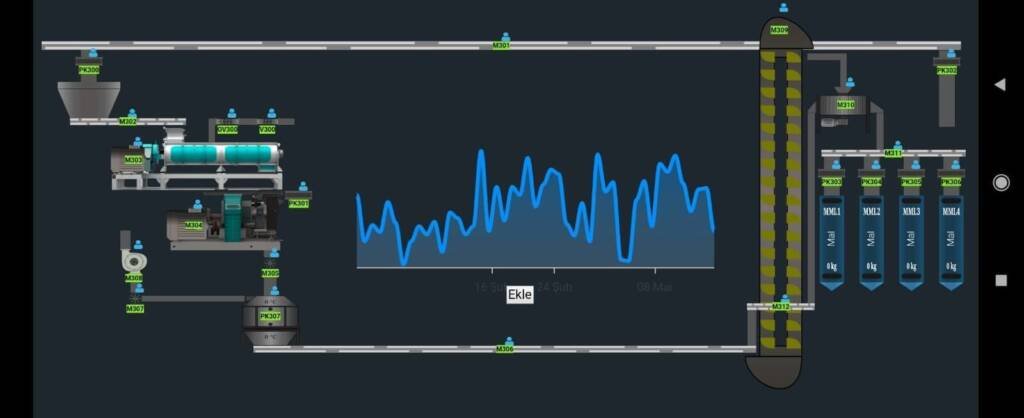
Product Features
Internal;
- MCC Panels
- Contactors
- Circuit Breakers
- Frequency Inverters for Grinding and Pelletizing Unit
- Loadcells for Dosing Units
- PLC Board and Controllers
- Computerized Control Panel
- Field Equipment, Level Sensors, Temperature Sensors, etc.
External;
- Transformer and Distribution Panels
- Cables and Cable Trays
- Medium Voltage Line
- Field Lighting and Fire Extinguishing System
- Telephone Lines
- Flowmeter
Control and Automation System Scope:
- Raw material procurement and distribution
- Dosing and Micro Dosing System
- Grinding Unit
- Mixing Unit
- Pelletizing Unit
- Bagging Unit
Maintenance and Update Electrical Installation Parameters via Internet;
- Number of Silos and Storages: no.
- Number of Carriers: nos.
- Number of Electric Motors: nos.
- Number of Pneumatic Covers: pcs.
- Total Power: kw
- Required Transformer Power : kva
UNFILTERED BELLOWS FLOW THROAT
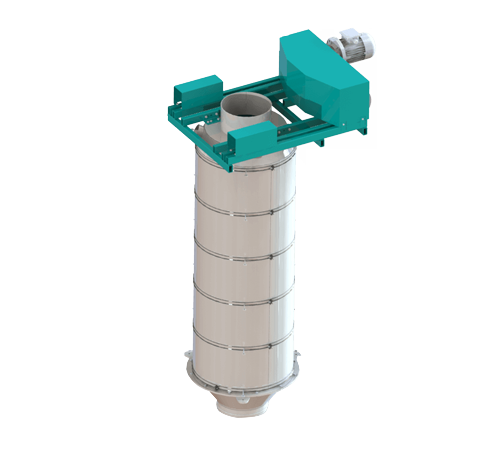
Principle of Operation
- Raw material filling bellows provide fast, dust-free and safe filling of dry powder and granular bulk raw materials to trucks, silobases, ships and stockyards. They are located at silo exits, bunker discharge ports, screw conveyor, elevator or pneumatic conveying systems in production facilities.
Product Features
- Sensors that prevent product overflow.
- Conical discharge tip compatible with different inlet openings in silobas filling.
- Automatic pull-up feature when the raw material filling process is finished.
- Bolt connected structure, easy maintenance and disassembly.
- Suitable for different conveyor and storage systems.
Safety at Work
Electromagnetic compatibility directive 2014/30/EU
Related Harmonized Standards : EN12100 – 1, EN12100 – 2, EN 14121-1, EN 287-1, EN 60204-1, EN 61000, EN 55011
Low voltage directive 2014/35/EU
Machinery directive 2006/42/EC
Options
- Wide range of models for different powder and granular raw materials, different applications.
Spare Parts
- Bearings and Housings
- Steel Wire Rope
Reasons for Preference
- Safe working environment.
- Easy operation.
- Maintenance-free structure.
- Lossless product filling.
FILTERED BELLOWS FLOW THROAT
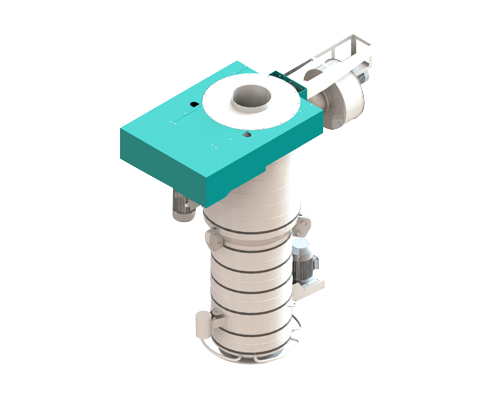
Principle of Operation
- Raw material filling bellows provide fast, dust-free and safe filling of dry powder and granular bulk raw materials to trucks, silobases, ships and stockyards. They are located at silo exits, bunker discharge ports, screw conveyor, elevator or pneumatic conveying systems in production facilities.
Product Features
- Sensors that prevent product overflow.
- Conical discharge tip compatible with different inlet openings in silobas filling.
- Automatic pull-up feature when the raw material filling process is finished.
- Bolted connection, easy maintenance and disassembly. Suitable for different conveyor and storage systems.
- With the dusting that occurs during product discharge, the filter cloths on the system capture the dust and return it back to the system with the help of pulse valves.
Safety at Work
Electromagnetic compatibility directive 2014/30/EU
Related Harmonized Standards : EN12100 – 1, EN12100 – 2, EN 14121-1, EN 287-1, EN 60204-1, EN 61000, EN 55011
Low voltage directive 2014/35/EU
Machinery directive 2006/42/EC
Options
- Wide range of models for different powder and granular raw materials, different applications.
Spare Parts
- Bearings and Housings
- Steel Wire Rope
- Fan
Reasons for Preference
- Safe working environment
- Easy to use
- Maintenance-free structure
- Lossless product filling
- Clean environment
FERTILE MIXER
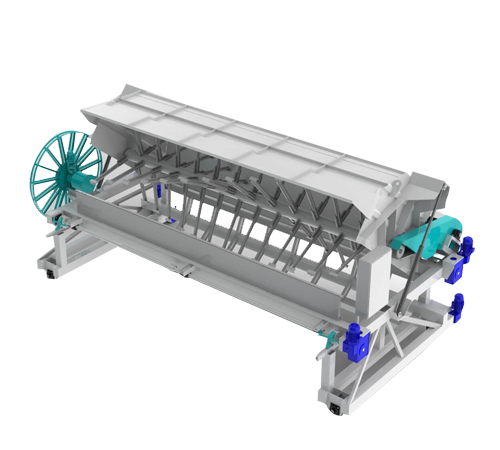
Principle of Operation
- It provides mixing and aeration of organic fertilizers in the fertilizer drying pools.It makes mixing along the pool by means of rails laid on the sides of the pool.There is a transport system that provides movement between the pools in the sequential pool system.Thanks to the switches placed on the pools, it performs the mixing process smoothly.The paddles on the rotor in the machine are structured to mix all of the fertilizer in the pool.
Product Features
- It is made of black sheet metal or stainless steel.
- Reducers are available in execution systems.
- The cable drum on the mixer is adjusted according to the pool length.
- The system is controlled by automation.
Safety at Work
Electromagnetic compatibility directive 2014/30/EU
Related Harmonized Standards : EN12100 – 1, EN12100 – 2, EN 14121-1, EN 287-1, EN 60204-1, EN 61000, EN 55011
Low voltage directive 2014/35/EU
Machinery directive 2006/42/EC
Options
- They can be produced in different sizes.
Spare Parts
- Bearings and Housings
- Drive Chain
- Pylons
- Gearboxes
Reasons for Preference
- Control of fermentation
- Suitability for automation
- Scalability of the system
FERTILIZER DRYER
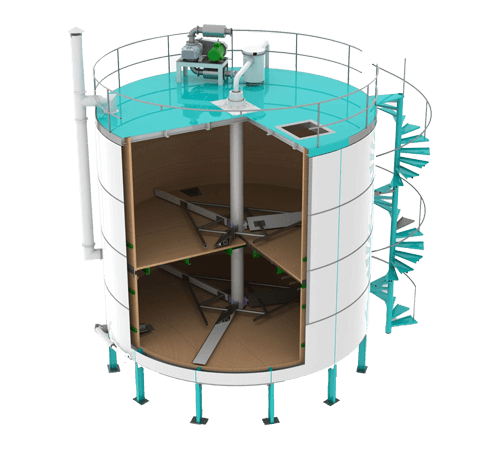
Principle of Operation
- Fertilizer dryer consists of 2 layers.The product entering the machine comes out of the machine within 7 – 15 days depending on the humidity.There is a rotor inside the machine that provides mixing.The arms on the rotor ensure that the air is given into the fertilizer and continuously mixed.Thanks to the hot air supplied, the fermentation time of the fertilizer is shortened.The fertilizer that completes its movement in the upper section is taken to the lower section through the intermediate cover.
Product Features
- The bottom and side parts of the machine floors are specially covered with acid resistant wood.
- All system elements are suitable for 24 hours operation.
- Loading and unloading operations are carried out with conveyor belts.
- Heat insulation has been made for heat saving purposes.
- Rotor movement and cover controls are realized by hydraulic cylinders.
Safety at Work
Electromagnetic compatibility directive 2014/30/EU
Related Harmonized Standards : EN12100 – 1, EN12100 – 2, EN 14121-1, EN 287-1, EN 60204-1, EN 61000, EN 55011
Low voltage directive 2014/35/EU
Machinery directive 2006/42/EC
Options
- They can be produced in different sizes.
Spare Parts
- Bearings and Housings
- Hydraulic System
- Blower System
Reasons for Preference
- Ideal for fast fermentation.
- Minimum space requirement
FLAKER
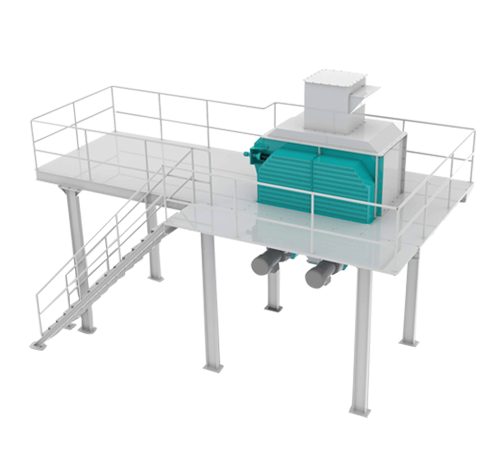
Principle of Operation
- There are two crushing balls in the body.At the product inlet throat, there is a distributor that ensures that the semi-finished product is evenly distributed on the ball.The semi-finished product distributed here is directed towards the center of the balls.One of the balls is fixed and the other is movable in order to adjust the thickness of the puck.The pressure force on the ball is provided by the springs on the adjustment arm.At the end of the adjustment arm, there are indicators to check that the distance between the balls is equal at the two end points.Both balls are driven by separate motors independently of each other.
Product Features
- Upper throat and lower bunker are made of stainless steel sheet.
- There is a control cover and P 100 on the upper throat.
- The balls are driven independently of each other by belt and pulley system.
- Even if the crushing balls are worn, there is a system to adjust the intermediate distance.
- In case of wear, damage, etc. on the balls, their surfaces can be processed and reused.
- There are scraper systems in the body to separate the products sticking to the balls.
- Flake machine is placed on a steel construction platform.
- The machine can be controlled by automation system.
Safety at Work
Electromagnetic compatibility directive 2014/30/EU
Related Harmonized Standards : EN12100 – 1, EN12100 – 2, EN 14121-1, EN 287-1, EN 60204-1, EN 61000, EN 55011
Low voltage directive 2014/35/EU
Machinery directive 2006/42/EC
Options
- The ball adjustment system can be hydraulically controlled.
Spare Parts
- Bolt
- Nut
- Crushing Balls
Reasons for Preference
- Quality flake production at minimum economic cost
- High digestibility rate
- Reduced dust output
DRYER AND COOLER
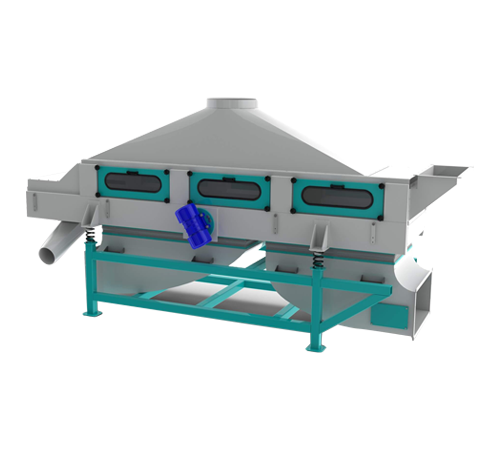
Principle of Operation
- It is a machine that reduces the moisture content in the flaked product, cools and sieves it. It is connected under the crushing machine. The machine system works with vibration. The goods falling from the crusher to the dryer and cooler pass through three stages. In the first stage, hot dry air is encountered and the moisture inside is reduced. In the second stage, the product is cooled down by encountering cold dry air. In the last stage, the product is sieved and separated from dust and very small pieces. The heating system that provides hot air to the machine works with natural gas, electric heaters and steam tunnels. In the cooling section, the air filtered from the environment cools the products inside the machine. The air supplied for drying and cooling the machine is drawn by the aspiration system connected at the top. With the cyclone system placed inside the aspiration system, the dust and particles drawn by the air are brought back into the system.
Product Features
- The body is made of St 37 material.
- The body consists of two parts as lower chassis and upper process section.
- Product passage is provided by vibration.
- Two vibro motors determine the movement speed of the product.
- The upper process section and the chassis are connected to each other with springs.
- Lower air inlet and upper air outlet sections are connected to other systems with cloth.
- There is a window system that can control the inside of the machine.
Safety at Work
Electromagnetic compatibility directive 2014/30/EU
Related Harmonized Standards : EN12100 – 1, EN12100 – 2, EN 14121-1, EN 287-1, EN 60204-1, EN 61000, EN 55011
Low voltage directive 2014/35/EU
Machinery directive 2006/42/EC
Options
- The body can be manufactured as stainless steel.
Spare Parts
- Springs
- Vibro Motor
Reasons for Preference
- Efficient – provides fast drying and cooling.
- Discharge amount can be adjusted.
- Minimum deformation of the product to be cooled.
ANNEALING TOWER
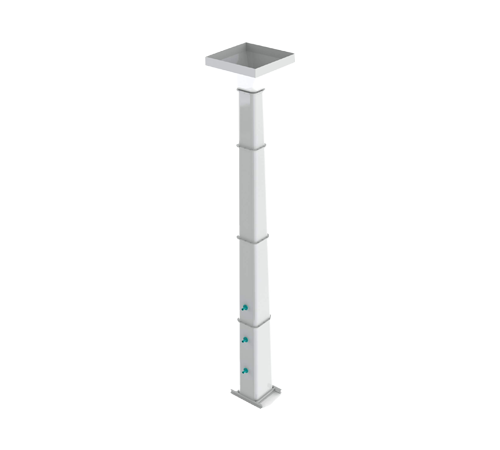
Principle of Operation
- The products transported by the elavator system are discharged into the upper bunker of the tower. From here they are filled into the annealing tower. Steam is supplied into the system from the lower part of the tower. Semi-finished products that spend a certain period of time under the influence of steam in the tower are annealed. They are transported to the crushing machine by means of a double screw at the bottom of the tower.
Product Features
- The system is manufactured from stainless steel sheet.
- Steam inlets are flange connected.
- The tower is manufactured in parts.
Safety at Work
Electromagnetic compatibility directive 2014/30/EU
Related Harmonized Standards : EN12100 – 1, EN12100 – 2, EN 14121-1, EN 287-1, EN 60204-1, EN 61000, EN 55011
Low voltage directive 2014/35/EU
Machinery directive 2006/42/EC
Options
- Can be manufactured in different sheet thicknesses and sizes.
- They can be manufactured in different width and length heights.
Spare Parts
- Sensors and Measuring Instruments
Reasons for Preference
- Improve flake quality
MILL HAMMER
Product Features
- Laser cut from special material. The most suitable HRC is hardened with heat treatment and shipped.
MILL SIEVE
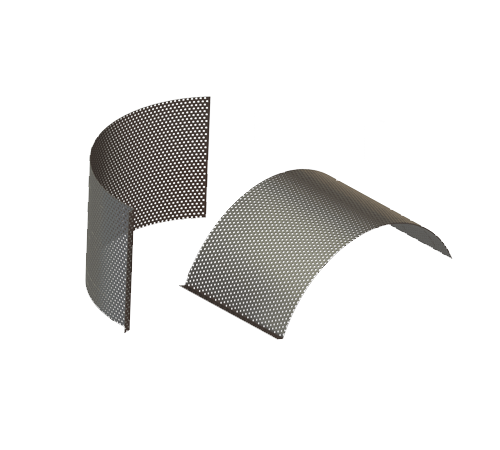
Product Features
- Sheet perforated sheets are manufactured in desired hole diameter and dimensions. Frequently perforated sheets are preferred as material.
ROLL
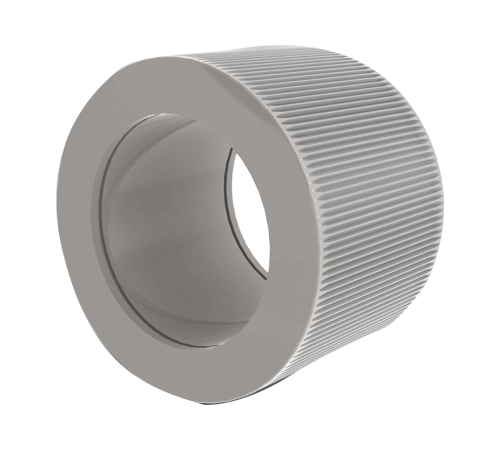
Product Features
- Rolls are imported from abroad. We sell in rolls as closed channel – channel and perforated. Local production is made according to demand.
DISK
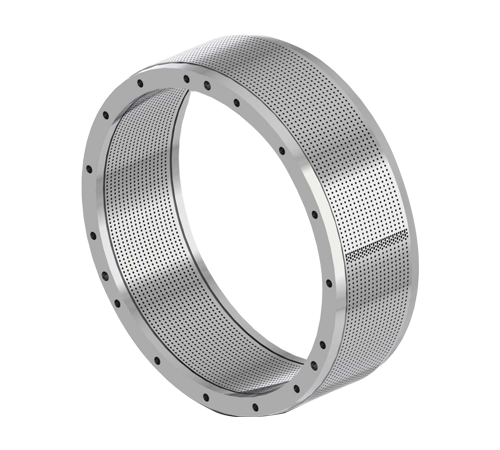
Product Features
- Discs are also imported from abroad and are available in all pellet sizes. Other company disks can also be supplied.
CAPLINS
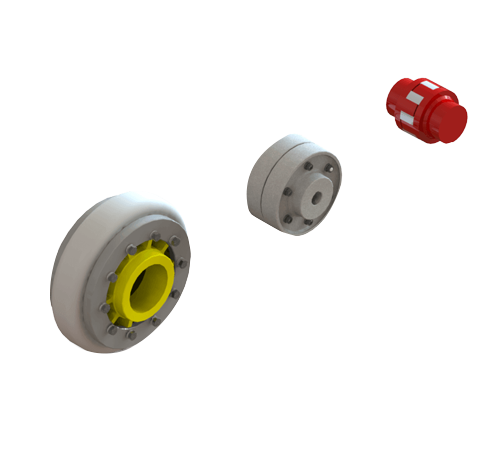
Product Features
- Couplings are machined from cast material and holes are drilled in CNC machining center. Coupling tires are also made of rubber material and are available in casting and rendering types.
CHAIN CONVEYOR SPARE PARTS
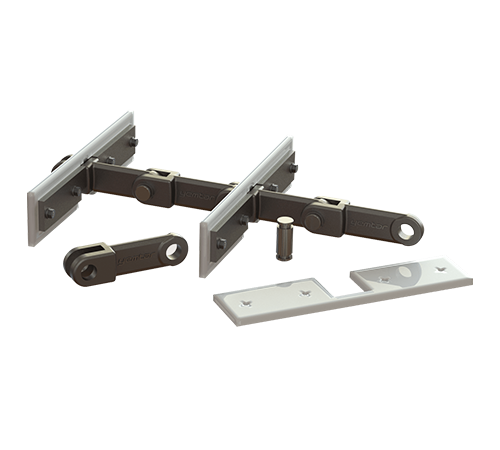
Product Features
- Chains are assembled from steel forged links with pins and circlips and shipped. The pads attached to the chains can be polyethylene or molasses coated with special coating to prevent product adhesion.
ELEVATOR BAND
Product Features
- Elevator belts are available in closed edge, open edge, EP quality upon request and according to the place of use. Elevator bands are drilled according to the dimensions given by the end user and shipped ready to use.
EXCLUSIVE ELEVATOR BUCKET
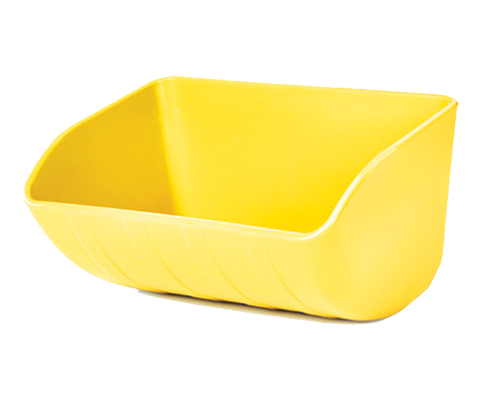
Product Features
- Chains are assembled from steel forged links with pins and circlips and shipped. The pads attached to the chains can be polyethylene or molasses coated with special coating to prevent product adhesion.
PREMIUM ELEVATOR BUCKET
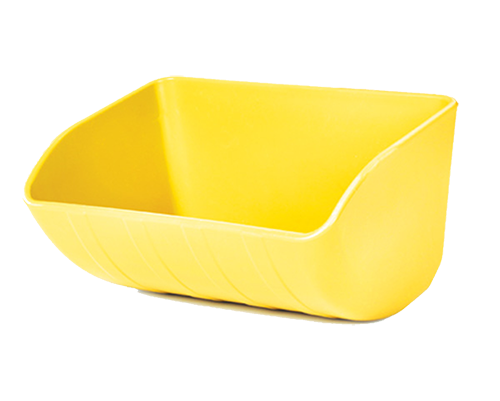
Product Features
- High Density Polyethylene – HDPE “High Density Polyetylene” is enriched with raw materials and additives to increase impact resistance. Additives are produced from engineering plastics and applied at a rate of 27% so as not to disrupt the family chain of the material. Millpart Premium elevator buckets show high resistance to breakage thanks to their flexible structure. High-density polyethylene and hardening additives are produced by providing maximum compression and density with low-speed injection technology, thus creating a more resistant chain against friction-induced mouth melting. In its production, it combines opposite properties such as hardness and flexibility in the production phase.